
In today's competitive technology environment, stagnation is the silent killer of innovation. The difference between market leaders and followers often comes down to one core discipline: the relentless pursuit of getting better. This isn't about chasing fleeting trends; it's about embedding a culture of incremental, measurable progress into your organization's DNA. Effective continuous improvement strategies are the engine that powers this transformation, turning good operations into great ones.
These are the frameworks that enable businesses to reduce processing times by over 60%, execute zero-downtime cloud migrations, and unlock the full potential of AI-driven solutions. However, many organizations struggle to move from theory to practice, getting lost in a sea of methodologies without a clear roadmap. This guide cuts through the noise. We will explore 10 powerful, field-tested continuous improvement strategies that provide a structured approach to optimizing performance.
Each one offers a unique lens for identifying waste, enhancing quality, and accelerating outcomes. This listicle is designed for technology leaders aiming to scale AI, CEOs planning digital transformation, and operations teams tasked with streamlining complex processes.
For organizations seeking a partner to implement these frameworks, Dr3amsystems provides end-to-end services from strategy to execution. Their expertise in AI, secure cloud migration, and dedicated managed support helps businesses turn improvement goals into measurable results. By aligning technology with business value, they equip teams to adopt these strategies confidently and accelerate outcomes. Whether modernizing legacy systems or scaling cutting-edge infrastructure, these strategies provide the structure needed to achieve sustainable growth and a powerful competitive edge.
1. Lean Six Sigma
Lean Six Sigma is a powerhouse methodology among continuous improvement strategies, merging Lean’s focus on waste elimination with Six Sigma’s data-driven approach to reducing process variation and defects. In a technology context, it provides a structured framework for optimizing everything from software development life cycles (SDLC) to cloud infrastructure management. By identifying and removing non-value-added steps (waste) and using statistical analysis to minimize errors, organizations can significantly improve efficiency, quality, and speed.
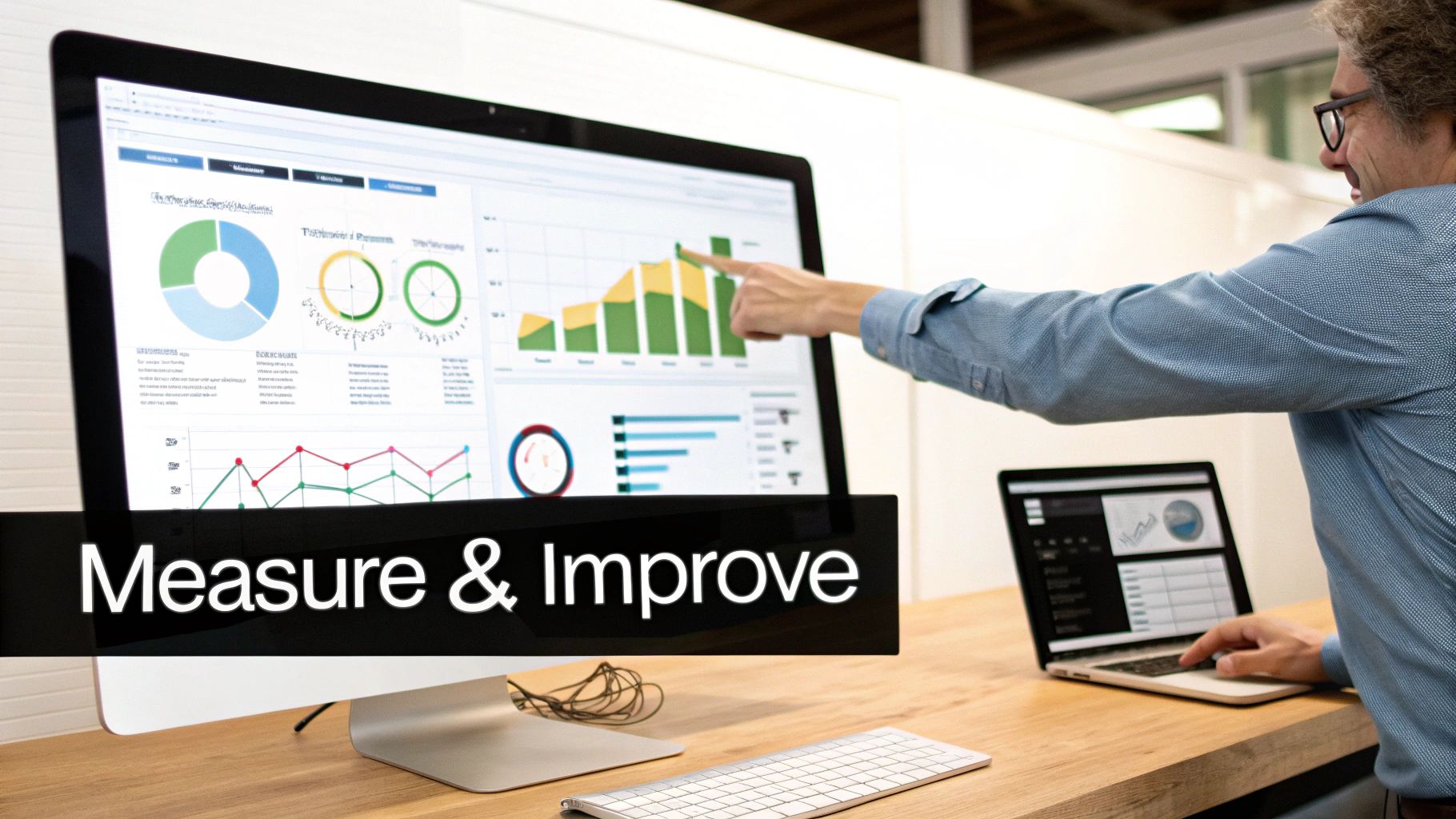
This dual approach is highly effective for complex IT initiatives. For instance, Amazon uses Lean principles across its AWS operations to enhance cloud service delivery, while Google applied Six Sigma to cut its data center energy consumption by a staggering 40%. The goal is to create streamlined, predictable, and high-quality processes that deliver maximum value.
When and Why to Use Lean Six Sigma
This methodology is ideal for organizations facing challenges with process inefficiency, high defect rates, or inconsistent performance in critical operations. It is particularly valuable for large-scale initiatives like cloud migrations or deploying new AI models, where even minor errors or delays can lead to significant cost overruns and operational disruptions. Lean Six Sigma provides the tools to measure baseline performance, identify root causes of problems, and validate improvements with hard data.
Actionable Implementation Steps
- Define and Measure: Start by identifying a high-impact, measurable process, such as your CI/CD pipeline or incident response workflow. Establish clear baseline metrics (e.g., deployment frequency, mean time to resolution) before making any changes.
- Invest in Training: Equip your technology teams with the necessary skills by investing in Lean Six Sigma Green Belt training. This empowers them to lead improvement projects independently.
- Analyze and Improve: Use statistical tools like regression analysis and hypothesis testing to pinpoint the root causes of inefficiencies. Implement targeted changes based on your data-driven findings.
- Automate Waste Elimination: Pair your Lean Six Sigma initiatives with powerful automation tools. For insights on how this works, learn more about IT automation and how it accelerates process optimization.
- Control and Sustain: Establish monitoring and control mechanisms to ensure the improvements are sustained over time. Dr3amsystems' dedicated managed support can help implement these controls, providing the oversight needed to maintain peak operational performance and drive continuous value from your technology investments.
2. Kaizen (Continuous Improvement Culture and Kaizen Event)
Kaizen is a foundational Japanese philosophy central to many continuous improvement strategies, championing small, incremental changes made by everyone, every day. Unlike top-down mandates, it fosters a culture where all team members, from developers to operations staff, are empowered to identify and eliminate waste. In technology, this translates to rapid, continuous iteration on code, infrastructure, and processes, creating a self-sustaining cycle of optimization.
A key component is the Kaizen Event, a short-term, intensive workshop (typically 3-5 days) focused on a specific process. This structured approach allows teams to quickly implement and validate improvements. For instance, Toyota’s legendary production system is built on Kaizen principles, while Netflix embodies this philosophy in its DevOps culture to enable rapid, reliable deployments and service enhancements. The goal is to make improvement a consistent, ingrained habit rather than a sporadic initiative.
When and Why to Use Kaizen
Kaizen is ideal for organizations looking to build a proactive culture of ownership and drive grassroots innovation. It excels at tackling persistent, nagging issues that are often overlooked, such as slow deployment pipelines, inefficient cloud resource provisioning, or cumbersome incident response protocols. A Kaizen Event is particularly powerful when you need to quickly solve a well-defined problem, like reducing the cycle time for a specific feature release or streamlining a data ingestion process for a new AI model, delivering measurable results in under a week.
Actionable Implementation Steps
- Establish a Suggestion System: Create a simple, accessible channel (like a dedicated Slack channel or a Trello board) for engineering and operations teams to submit improvement ideas. Acknowledge every submission to encourage participation.
- Conduct Focused Kaizen Events: Identify a high-impact, measurable process for a blitz. Gather a cross-functional team, map the current state, brainstorm improvements, and implement the best ideas immediately.
- Celebrate Small Wins: Publicly recognize individuals and teams for their contributions, no matter how small. This reinforces the value of incremental progress and fuels cultural momentum.
- Integrate with Retrospectives: Use agile retrospectives as a natural forum for Kaizen. Ask "What small change can we make next sprint to improve our workflow?" to embed the mindset into existing rituals.
- Track and Sustain Gains: Kaizen’s success depends on sustaining improvements. Dr3amsystems' dedicated managed support helps implement the monitoring and governance needed to track performance post-event, ensuring your operational enhancements deliver long-term value and ROI.
3. Agile and DevOps
Agile and DevOps are two of the most transformative continuous improvement strategies in modern technology. Agile provides a framework for iterative development and rapid feedback through sprints and retrospectives, while DevOps culture and practices break down silos between development and operations teams. Together, they create a symbiotic loop that accelerates software delivery, improves quality, and embeds improvement directly into the workflow.
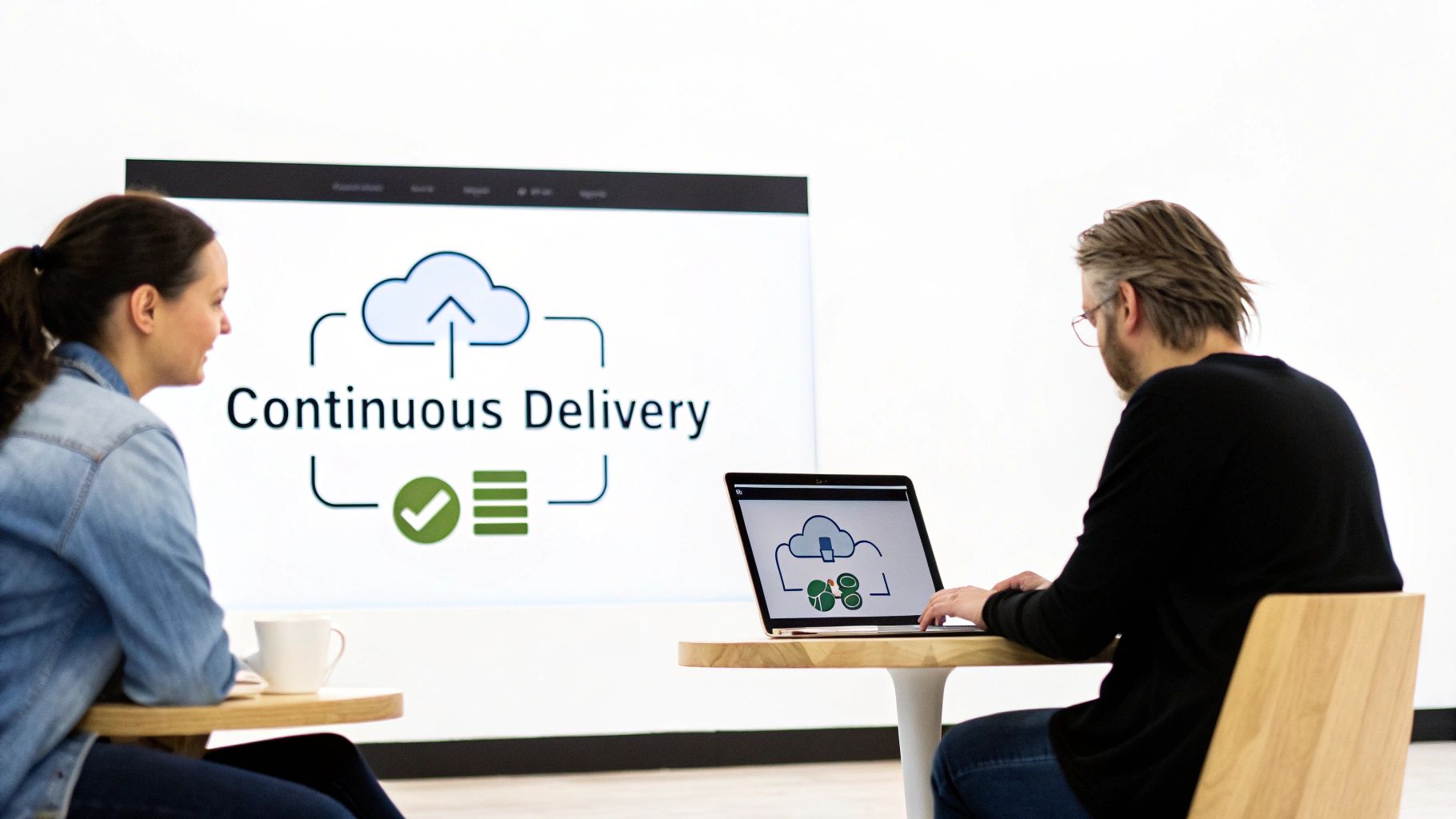
This powerful combination enables organizations to respond to market changes with incredible speed. For example, Amazon’s widespread DevOps adoption allows it to perform thousands of deployments daily, while Netflix pioneered continuous deployment in the cloud to maintain its competitive edge. The goal is to create a seamless flow from code commit to production, with feedback driving constant refinement.
When and Why to Use Agile and DevOps
This approach is essential for any technology organization aiming to increase deployment frequency, reduce lead time for changes, and enhance system reliability. It is particularly effective for teams building cloud-native applications, managing complex microservices architectures, or undergoing a digital transformation. Agile and DevOps provide the cultural and technical foundation to move faster without sacrificing stability, ensuring that innovation is both rapid and sustainable.
Actionable Implementation Steps
- Automate the Pipeline: Build a robust CI/CD (Continuous Integration/Continuous Delivery) pipeline to automate testing, integration, and deployment. This is the technical backbone of DevOps.
- Embrace Infrastructure as Code (IaC): Use tools like Terraform or Ansible to manage and provision infrastructure through code. This ensures consistency, repeatability, and scalability.
- Conduct Blameless Retrospectives: After sprints or incidents, hold blameless retrospectives to focus on identifying systemic issues rather than assigning individual fault. This fosters a culture of psychological safety and true continuous improvement.
- Implement Comprehensive Monitoring: Establish clear monitoring and observability with tools that track application performance, infrastructure health, and user experience. Use these insights to guide improvements.
- Secure Expert Guidance: A successful DevOps transformation requires deep expertise. Partnering with Dr3amsystems provides the strategic guidance and hands-on execution needed to build secure, automated pipelines and foster a high-performance culture, ensuring a smooth transition and long-term success.
4. Total Quality Management (TQM)
Total Quality Management (TQM) is a holistic philosophy that embeds quality into an organization’s culture, making it one of the most comprehensive continuous improvement strategies. It involves every employee in quality assurance and process optimization, shifting the focus from defect detection to defect prevention. In a technology context, TQM means building quality into every phase of system design, deployment, and maintenance, ensuring reliable cloud migrations and trustworthy AI implementations from the start.
This customer-centric approach drives long-term success by aligning all organizational efforts toward delivering exceptional value. For example, IBM leveraged TQM principles to establish itself as a leader in enterprise technology services, while Apple’s renowned product quality standards reflect a deep commitment to TQM across its design and manufacturing pipelines. The core idea is that quality is a shared responsibility, not just the job of a single department.
When and Why to Use Total Quality Management
TQM is ideal for organizations committed to building a sustainable culture of excellence and achieving market leadership through superior quality. It is particularly effective for complex initiatives like deploying mission-critical AI models or executing a large-scale cloud migration, where post-launch defects can lead to significant financial loss and reputational damage. By focusing on customer satisfaction and empowering all employees to contribute to quality, TQM creates a resilient framework for innovation and reliability.
Actionable Implementation Steps
- Establish Clear Quality Metrics: Define and track specific quality metrics for key operations, such as system uptime for cloud infrastructure or accuracy thresholds for AI models. Make these metrics visible across the organization.
- Create Cross-Functional Quality Teams: Assemble teams that include developers, operations, security, and business stakeholders. This fosters collaboration and ensures quality considerations are integrated throughout the entire value stream.
- Implement Automated Quality Gates: Embed automated testing and validation checks directly into your CI/CD pipelines. This enforces quality standards programmatically, preventing defects from reaching production.
- Conduct Regular Audits and Reviews: Perform systematic quality audits of your cloud environments, data pipelines, and AI model performance to identify and address potential issues proactively.
- Secure Ongoing Quality Oversight: Sustaining TQM requires continuous monitoring and expert management. For organizations that need to ensure their technology stack remains optimized and secure, Dr3amsystems offers expert managed IT support services to provide the necessary oversight and maintain a culture of relentless quality improvement.
5. Business Process Management (BPM)
Business Process Management (BPM) is one of the most foundational continuous improvement strategies, focusing on designing, executing, monitoring, and optimizing end-to-end business processes. In a technology-driven environment, BPM provides the blueprint for aligning operational workflows with strategic goals, using process mining, analytics, and automation to eliminate bottlenecks. It shifts the focus from managing individual tasks to optimizing the entire value-delivery chain, making it a critical discipline for digital transformation.
This systematic approach is essential for achieving operational excellence. For instance, JPMorgan Chase leveraged automated BPM workflows to cut its loan processing time by a remarkable 70%. Similarly, Accenture applies BPM principles to help global enterprises streamline complex supply chain and financial operations, proving its effectiveness at a massive scale. The goal is to create agile, transparent, and highly efficient processes that adapt to changing business needs.
When and Why to Use BPM
BPM is ideal for organizations struggling with fragmented workflows, manual handoffs, a lack of process visibility, or operational inefficiencies that hinder scalability. It is especially valuable for initiatives like cloud migrations or implementing AI, where success depends on well-defined and automated underlying processes. By mapping out existing workflows and re-engineering them for optimal performance, BPM ensures that technology investments deliver their intended ROI without being undermined by legacy inefficiencies.
Actionable Implementation Steps
- Identify High-Impact Processes: Begin with high-volume, repetitive processes like client onboarding or IT service requests. These offer the greatest potential for quick wins through automation and optimization.
- Map and Model: Use process mining and modeling tools to visualize your current state ("as-is") versus your ideal future state ("to-be"). This helps uncover hidden inefficiencies and shadow IT operations.
- Implement and Automate: Leverage a robust suite of business process automation tools to digitize and automate the redesigned workflows. Focus on integrating systems to create a seamless flow of information.
- Monitor with Dashboards: Establish real-time monitoring dashboards to track key performance indicators (KPIs) such as cycle time, error rates, and cost per transaction. Use this data to identify further improvement opportunities.
- Establish Governance and Control: Implement a clear governance framework for managing process changes. Dr3amsystems provides dedicated managed support to help maintain these optimized workflows, ensuring that improvements are sustained and continuously refined over time for peak performance.
6. The Plan-Do-Check-Act (PDCA) Cycle
The Plan-Do-Check-Act (PDCA) cycle, also known as the Deming Cycle, is a foundational iterative method for continuous improvement. As one of the most straightforward yet powerful continuous improvement strategies, it provides a four-stage framework for testing hypotheses and implementing changes in a controlled, scientific manner. In a technology context, it’s an ideal tool for experimenting with new cloud configurations, optimizing AI model performance, or refining cybersecurity protocols without introducing large-scale risk.
The cycle promotes a culture of incremental progress. Toyota famously embedded PDCA into its production system to drive relentless optimization, while AWS uses the methodology to safely test infrastructure changes and roll out new services. The goal is to create a simple, repeatable loop for learning and improvement, turning every operational challenge into an opportunity for refinement.
When and Why to Use the PDCA Cycle
PDCA is perfect for organizations that need a simple, low-risk, and structured approach to problem-solving and improvement. It is especially effective for iterative initiatives like tuning cloud resource allocation, A/B testing user interface changes, or enhancing AI model accuracy. Because it starts with a small-scale implementation (the “Do” phase), it minimizes the potential negative impact of a failed experiment, making it a safe choice for critical systems where stability is paramount.
Actionable Implementation Steps
- Plan: Define a clear hypothesis and success metrics. For example, "We believe re-configuring our database read replicas will reduce query latency by 15%." Identify the specific change to be tested and the data you will collect.
- Do: Implement the change on a small, controlled scale. Use techniques like canary deployments or blue-green testing to roll out the update to a limited subset of users or infrastructure. This contains the blast radius if the change is unsuccessful.
- Check: Analyze the results against your initial plan. Did you achieve the expected 15% latency reduction? Document all findings, including unexpected outcomes. This data is crucial for organizational learning.
- Act: If the change was successful, standardize it by rolling it out across the entire system. If not, use the insights gathered to return to the “Plan” phase with a revised hypothesis.
- Sustain and Optimize: To ensure long-term success, partner with a technology expert. Dr3amsystems can help you embed the PDCA cycle into your operational workflows, providing the expert oversight to monitor performance, manage infrastructure, and continuously identify new areas for data-driven improvement.
7. Balanced Scorecard (BSC)
The Balanced Scorecard (BSC) is a strategic management framework that moves beyond traditional financial metrics to provide a more holistic view of organizational performance. As one of the core continuous improvement strategies, it translates a company's vision into a set of measurable objectives across four key perspectives: financial, customer, internal business processes, and learning and growth. In a technology context, this ensures that IT initiatives like AI adoption or cloud migrations are directly tied to broader business outcomes, not just technical milestones.
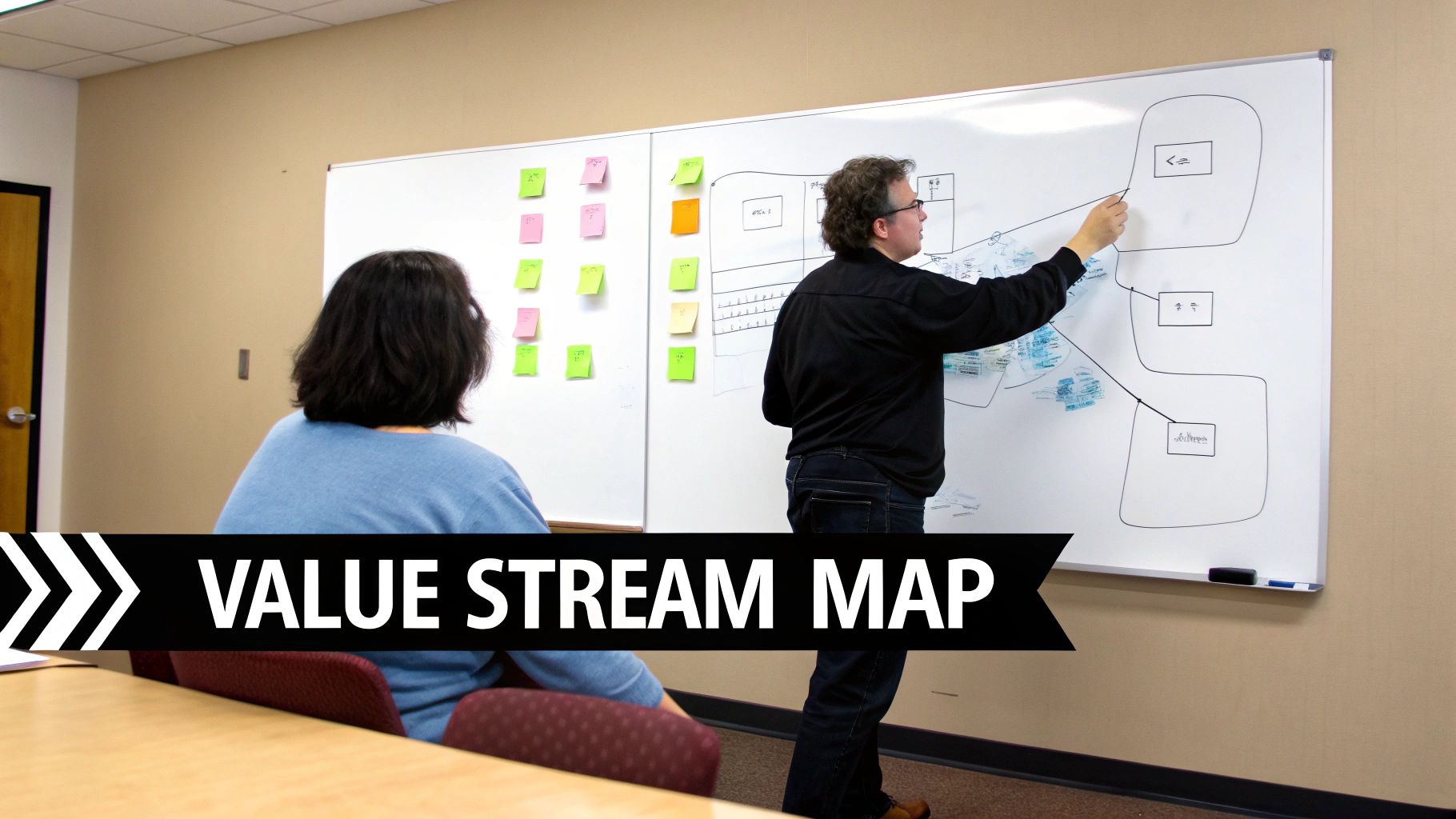
This comprehensive approach helps leaders connect dots that are often missed. For example, ExxonMobil used the BSC to align its global refining operations with corporate strategy, leading to significant performance gains. Similarly, Hilton Hotels implemented it to track and improve guest satisfaction, which directly correlated with increased profitability. The goal is to create a cause-and-effect linkage between all improvement efforts and strategic goals.
When and Why to Use a Balanced Scorecard
The BSC is ideal for organizations that struggle to align their technology investments with tangible business value or find their improvement efforts are siloed and uncoordinated. It is especially powerful during a digital transformation, where you must measure progress on multiple fronts simultaneously, such as tracking cloud migration ROI (financial), customer adoption of new features (customer), CI/CD pipeline efficiency (internal processes), and team upskilling in AI technologies (learning and growth).
Actionable Implementation Steps
- Define Strategic Objectives: Across the four perspectives, define clear, high-level objectives that align with your company's vision. For example, a customer objective might be "Enhance User Experience," while a financial one could be "Reduce Cloud Infrastructure Costs."
- Select Key Metrics: Limit yourself to 15-25 key metrics total. Focus on a mix of leading indicators (e.g., number of employees trained in new AI tools) and lagging indicators (e.g., quarterly revenue growth).
- Establish Clear Ownership: Assign a leader or team to be accountable for each objective and its corresponding metrics. This ensures focus and drives progress.
- Cascade Goals: Link individual and team goals directly to the BSC objectives. An engineer's goal to reduce application latency directly supports the customer objective of enhancing user experience.
- Review and Adapt: Conduct regular BSC review meetings (monthly or quarterly) to assess progress and make data-driven course corrections. Dr3amsystems can help implement the monitoring dashboards and reporting structures needed for these reviews, ensuring your strategy remains agile and effective.
8. Value Stream Mapping (VSM)
Value Stream Mapping (VSM) is a cornerstone of continuous improvement strategies, providing a powerful visual tool to analyze and optimize entire workflows. It involves creating a detailed diagram of every step in a process, from request to delivery, to distinguish between value-added activities and wasteful ones. In a technology context, VSM helps teams see the bigger picture, whether they're mapping a cloud migration project or an AI model deployment pipeline.
The goal is to identify bottlenecks, delays, and non-value-added steps, then redesign the process to be more efficient. For example, a financial services firm can use VSM to drastically cut down its loan approval timeline, while technology companies map deployment processes to achieve faster, more reliable releases. It moves teams from fixing isolated problems to optimizing the entire system for value delivery.
When and Why to Use Value Stream Mapping
VSM is ideal when you need to understand and improve a complex, multi-step process with long lead times or frequent delays. It's particularly effective for large-scale initiatives like digital transformations or building scalable infrastructure where handoffs between teams (Dev, Ops, Security) often create hidden inefficiencies. By visualizing the entire flow, you can pinpoint exactly where work stalls and resources are wasted, creating a clear case for targeted improvements.
Actionable Implementation Steps
- Select a High-Impact Value Stream: Choose a critical process to map first, such as your end-to-end incident management or a customer onboarding workflow. Assemble a cross-functional team that represents every touchpoint in the process.
- Map the Current State: Walk through the process as it currently exists, documenting every step, handoff, delay, and system involved. Capture key metrics like cycle time and wait time for each stage.
- Identify Waste and Bottlenecks: Analyze the current state map to identify the seven classic forms of waste (e.g., waiting, over-processing, defects). Highlight the key constraints that slow down the entire flow.
- Design the Future State: Create a new map that illustrates an optimized, leaner process. This future state should eliminate identified waste, introduce automation, and streamline handoffs.
- Create and Execute an Improvement Plan: Develop an actionable roadmap to transition from the current to the future state. With deep expertise in AI, cloud, and security, Dr3amsystems can help execute this plan by implementing targeted automation and process re-engineering, ensuring your theoretical improvements become operational realities.
9. Failure Mode and Effects Analysis (FMEA)
Failure Mode and Effects Analysis (FMEA) is a systematic, proactive technique for identifying potential failures in a process, product, or service before they occur. As one of the most risk-focused continuous improvement strategies, FMEA is designed to prevent disruptions by assessing the severity, likelihood of occurrence, and detectability of potential problems. This foresight allows technology organizations to build exceptional reliability, mitigate downtime, and support zero-downtime transitions.
This methodology is essential for systems where failure is not an option. For example, NASA uses FMEA extensively to prevent catastrophic failures during space missions, and cloud providers like AWS apply it to design resilient infrastructure with robust failover systems. By calculating a Risk Priority Number (RPN) for each potential failure mode, teams can prioritize actions that neutralize the most significant threats to operational stability.
When and Why to Use FMEA
FMEA is most valuable before implementing major system changes, executing complex cloud migrations, or deploying new AI models where the consequences of failure are high. It provides a structured way to anticipate and address vulnerabilities that could otherwise lead to security breaches, data loss, or significant service outages. By proactively identifying and mitigating these risks, you build a more robust and resilient technology ecosystem.
Actionable Implementation Steps
- Assemble a Cross-Functional Team: Bring together experts from development, operations, security, and business units. A diverse team ensures a comprehensive analysis of potential failure modes from multiple perspectives.
- Identify and Prioritize Risks: For a specific process like a new application deployment, list all potential failure modes. Score each one on a 1-10 scale for Severity, Occurrence, and Detection, then calculate the RPN (Severity x Occurrence x Detection) to prioritize high-risk items.
- Develop Mitigation Actions: For high-RPN items, define specific preventive and detective controls. This could involve adding redundancy to cloud infrastructure, enhancing automated testing, or implementing more sophisticated monitoring and alerting.
- Integrate FMEA into Project Planning: Make FMEA a standard part of your project lifecycle, especially during the initial stages. This proactive approach is fundamental to successful outcomes, as detailed in effective IT project initiation practices.
- Continuously Review and Update: FMEA is not a one-time activity. Dr3amsystems' managed support services can help establish processes to regularly review and update your FMEA documentation as systems evolve, ensuring your risk mitigation strategies remain effective and drive continuous improvement.
10. Root Cause Analysis (RCA) and Problem-Solving
Root Cause Analysis (RCA) is a foundational discipline among continuous improvement strategies, focused on systematically investigating why problems occur rather than just treating symptoms. It moves beyond superficial fixes to uncover the fundamental drivers of failures and inefficiencies. Using techniques like the 5 Whys or Fishbone (Ishikawa) diagrams, teams can dissect incidents, failed migrations, or even poor AI model performance to prevent recurrence and build more resilient systems.
This proactive approach is essential for maintaining operational integrity in complex technology environments. For example, AWS uses RCA for every major service outage, publishing detailed post-mortems to foster transparency and trust. Similarly, the aviation industry’s relentless application of RCA to every incident has made it one of the safest modes of transportation. The goal is to learn from every failure and turn it into a structural improvement.
When and Why to Use Root Cause Analysis
RCA is critical for any technology organization aiming to improve reliability and performance. It is indispensable after significant incidents, such as security breaches, data loss events, or major service disruptions. It is also highly effective for analyzing chronic, recurring issues like performance bottlenecks or frequent deployment failures. By institutionalizing RCA through blameless post-mortems, you create a culture of learning and engineering excellence, ensuring that every problem strengthens your organization.
Actionable Implementation Steps
- Adopt a Blameless Culture: Frame RCA sessions as learning opportunities, not inquiries to assign blame. The objective is to understand systemic weaknesses, which encourages honest and open participation.
- Use Structured Techniques: Train teams on simple yet powerful RCA methods. The "5 Whys" technique is excellent for quickly diagnosing straightforward technical incidents, while Fishbone diagrams help map out more complex, multi-faceted problems.
- Document and Track Findings: Create a centralized, searchable knowledge base for all RCA findings and corrective actions. Assign clear ownership and deadlines for each action to ensure accountability and follow-through.
- Integrate RCA into Incident Management: Make RCA a standard part of your response workflow. A well-defined process ensures that critical insights are captured immediately after an incident is resolved. To see how this fits into a broader framework, explore this guide on the incident management process.
- Leverage Expert Support: Dr3amsystems' managed support services can facilitate and formalize your RCA processes, helping implement robust tracking systems and ensuring corrective actions are effectively executed to prevent problem recurrence and enhance system stability.
10-Strategy Continuous Improvement Comparison
| Method | Implementation complexity 🔄 | Resources & training ⚡ | Expected outcomes 📊 | Ideal use cases 💡 | Key advantages ⭐ |
|---|---|---|---|---|---|
| Lean Six Sigma | 🔄 High — rigorous DMAIC, statistical methods, multi-month projects | ⚡ High — certified belts, analytics tools, dedicated project teams | 📊 Quantifiable cost/time/defect reductions (often 20–40%), sustained KPI improvements | Cloud migrations, deployment pipelines, IT operations optimization | ⭐ High ROI, data-driven, scalable across orgs |
| Kaizen (culture & events) | 🔄 Low–Medium — continuous small changes; events are short and focused | ⚡ Low — staff time for suggestions/events; leadership sponsorship required | 📊 Incremental but cumulative gains; quick wins (often 20–50%) | Daily process improvements, sprint retrospectives, Kaizen Blitz on migrations | ⭐ Builds engagement and sustainable habits; fast, low-cost wins |
| Agile & DevOps | 🔄 Medium–High — cultural change, new practices and workflows | ⚡ Medium–High — CI/CD, automation, skilled engineers, observability tools | 📊 Faster time-to-market, fewer defects, frequent safe deployments | Software delivery, ML model iteration, automated zero-downtime migrations | ⭐ Enables rapid iteration and operational automation at scale |
| Total Quality Management (TQM) | 🔄 High — organization-wide quality programs and long timelines | ⚡ High — extensive training, audits, quality systems and governance | 📊 Significant defect reduction, improved customer satisfaction, regulatory alignment | Enterprise services, regulated industries, end-to-end quality initiatives | ⭐ Holistic, prevention-focused quality and consistency |
| Business Process Management (BPM) | 🔄 Medium–High — process modeling, orchestration, governance | ⚡ Medium–High — process-mining/workflow platforms, integration work | 📊 Reduced manual work, visibility into bottlenecks, scalable throughput | Automating back-office workflows, high-volume processing, RPA | ⭐ Drives operational efficiency and measurable process automation |
| Plan–Do–Check–Act (PDCA) | 🔄 Low — simple four-step iterative cycle | ⚡ Low — minimal tooling; requires disciplined cadence | 📊 Low-risk learning, iterative improvements; quick validation of changes | A/B tests, canary deployments, small infrastructure or model experiments | ⭐ Simple, fast, low-cost way to validate and scale changes |
| Balanced Scorecard (BSC) | 🔄 High — strategic mapping across multiple perspectives | ⚡ Medium–High — leadership time, dashboards, metric governance | 📊 Better strategic alignment, leading indicators, tracked business impact | Aligning IT/AI investments to business outcomes, executive reporting | ⭐ Prevents siloed optimization; links daily work to strategy |
| Value Stream Mapping (VSM) | 🔄 Medium — collaborative mapping sessions and current/future states | ⚡ Low–Medium — stakeholder time, data collection for cycle times | 📊 Clear waste identification, reduced lead times, realistic improvement roadmap | Mapping migration workflows, data pipelines, cross-team processes | ⭐ Visual clarity of end-to-end flow; low-cost diagnostics |
| Failure Mode & Effects Analysis (FMEA) | 🔄 Medium–High — structured risk assessment process | ⚡ Medium — cross-functional experts, time to assess RPNs and mitigations | 📊 Proactive reduction of high-impact failures; improved reliability | High-risk deployments, mission-critical services, failover design | ⭐ Prioritizes risks and enables preemptive controls and compliance |
| Root Cause Analysis (RCA) | 🔄 Medium — systematic investigation techniques and facilitation | ⚡ Medium — skilled facilitators, time for evidence gathering, documentation | 📊 Reduces recurrence of incidents, faster troubleshooting, organizational learning | Post-incident reviews, outages, security breaches, failed migrations | ⭐ Identifies underlying causes and drives lasting corrective actions |
Start Your Improvement Journey with an Expert Partner
Embarking on a path of continuous improvement is a commitment to operational excellence and sustainable growth. We have explored a comprehensive toolkit of powerful continuous improvement strategies, from the statistical rigor of Lean Six Sigma and the cultural dedication of Kaizen to the agile frameworks of DevOps and the holistic approach of Total Quality Management. Each methodology, whether it's the cyclical PDCA model, the strategic Balanced Scorecard, or the forensic detail of Root Cause Analysis, offers a unique lens through which to view and refine your organization's processes.
The true challenge, however, is not simply knowing these frameworks exist. It lies in selecting the right combination, tailoring them to your specific business context, and executing them with precision. An improperly implemented Value Stream Map can lead to misguided cloud migration plans, while a superficial FMEA might leave critical vulnerabilities in your cybersecurity posture. The most effective continuous improvement strategies are not just theoretical concepts; they are practical, living processes integrated seamlessly into your daily operations. This integration is where the journey transitions from academic to actionable, and it’s a transition that often benefits from an experienced guide.
From Theory to Tangible ROI
The path to operational maturity is rarely a straight line. It requires a deep understanding of how these strategies intersect with modern technology imperatives like AI implementation, cloud-native infrastructure, and robust security protocols. For instance:
- Agile and DevOps principles are essential for accelerating the deployment of AI and machine learning models, creating a feedback loop that fuels rapid iteration.
- Business Process Management (BPM) provides the foundational structure for successful automation initiatives, ensuring that you automate efficient processes, not flawed ones.
- Failure Mode and Effects Analysis (FMEA) becomes a critical tool in a managed security context, proactively identifying and mitigating risks before they can impact your cloud environment.
This is where a strategic technology partner becomes an invaluable asset. An expert partner doesn't just offer advice; they provide hands-on execution, helping you connect the dots between high-level strategy and on-the-ground implementation. They ensure your efforts are not just busywork but are directly tied to measurable business outcomes, like reduced operational costs, faster time-to-market, and enhanced customer satisfaction.
Why a Partner Accelerates Your Progress
Navigating this complex landscape alone can be resource-intensive and fraught with trial and error. A dedicated partner like Dr3amsystems brings enterprise-grade expertise and a pragmatic, results-focused approach to your transformation. We specialize in translating powerful continuous improvement strategies into tangible results. Our focused practices—Dr3am AI, Dr3am Cloud, Dr3am Security, and Dr3am Hosting—are designed to align technology directly with your business goals.
We help our clients apply these frameworks to their most pressing challenges, delivering measurable outcomes like 60% reductions in processing time and zero-downtime cloud transitions. We believe that continuous improvement shouldn't be a theoretical exercise. It should be a practical engine for growth. By partnering with us, you gain a team dedicated to making that happen, ensuring your technology investments deliver clear and significant ROI. Your journey toward a more efficient, resilient, and innovative organization starts with the right first step.
Ready to transform your theoretical knowledge of continuous improvement into measurable business results? Schedule a free consultation with Dr3amsystems to build a pragmatic roadmap that aligns cutting-edge technology with your strategic goals. Our experts help you clarify goals, uncover automation opportunities, and design a plan that aligns technology with business value for sustainable growth.