
Digital transformation has become the core engine for competitive advantage, operational efficiency, and sustainable growth. Yet, a significant number of these initiatives fall short, often due to a critical disconnect between technology implementation and tangible business value. Success requires more than just adopting new tools; it demands a strategic, integrated approach that aligns every technological decision with clear organizational goals. Moving beyond generic advice is essential for navigating the complexities of modernization and achieving measurable returns on investment.
This guide provides a prioritized, actionable roundup of the top 10 enterprise-grade digital transformation best practices designed to de-risk your initiatives and drive meaningful outcomes. We will explore the "how" behind successful execution, covering everything from establishing executive strategy and modernizing legacy systems to implementing AI-driven automation and fortifying cybersecurity with a Zero-Trust framework. Each practice includes specific implementation steps, common pitfalls to avoid, and the key metrics that signal genuine progress.
For organizations seeking to accelerate these outcomes, a dedicated technology partner is invaluable. At Dr3amsystems, we provide the end-to-end expertise needed to turn strategy into reality through our specialized Dr3am Cloud, AI, and Security practices. Our approach focuses on delivering measurable results, such as 60% reductions in processing time and zero-downtime migrations, ensuring your transformation journey is both successful and sustainable. We help organizations build a roadmap that aligns technology directly with business value, equipping them to leverage the cloud confidently and adopt AI responsibly.
1. Establish Clear Digital Strategy & Governance Framework
A successful digital transformation begins not with technology, but with a clear, documented strategy that is intrinsically linked to core business objectives. This foundational practice involves creating a detailed roadmap that outlines technology initiatives, defines governance structures for decision-making, and establishes measurable key performance indicators (KPIs). Without this alignment, even the most advanced technology investments can fail to deliver meaningful value, leading to siloed projects, budget overruns, and a lack of competitive advantage.
This approach ensures that every digital initiative, from cloud migration to AI adoption, directly supports a specific business goal, such as increasing market share, improving operational efficiency, or enhancing customer experience. As famously demonstrated by Microsoft's "cloud-first, mobile-first" strategy, a well-defined framework provides the clarity needed to rally the entire organization around a unified vision. It transforms technology from a cost center into a strategic enabler of growth.
Implementation and Success Metrics
Implementing a robust digital strategy is one of the most critical digital transformation best practices. The process involves a thorough assessment of your current technological capabilities and business processes against future goals.
- Actionable Tips:
- Conduct a Comprehensive Assessment: Before planning, map out your existing systems, data architecture, and team skillsets. This reveals critical gaps and opportunities.
- Unify Leadership: Involve both the CTO and key business unit leaders from day one to ensure the strategy reflects both technological feasibility and commercial needs.
- Establish a Governance Council: Create a cross-functional team responsible for prioritizing initiatives, allocating resources, and resolving conflicts to maintain momentum.
- Define Clear KPIs: Tie every initiative to measurable outcomes like a 20% reduction in operational costs or a 15% increase in customer lifetime value.
A common pitfall is developing a digital strategy in an IT vacuum. True transformation occurs when technology initiatives are co-created with business stakeholders to solve tangible problems and unlock new revenue streams.
At Dr3amsystems, our Dr3am IT strategic consultations help you build this foundational roadmap. We work with your leadership to assess your current state, clarify goals, and design a governance framework that ensures your technology investments deliver predictable and measurable ROI. Engagements begin with a free consultation to uncover automation opportunities and design a roadmap that aligns technology with business value.
2. Adopt Cloud-Native Architecture & Migration Strategy
Modern digital transformation hinges on moving beyond rigid, on-premise legacy systems. Adopting a cloud-native architecture is a pivotal step, involving the use of microservices, containers, and serverless computing to build and run applications that are scalable, resilient, and flexible. This approach decouples monolithic applications into smaller, independent services, allowing teams to develop, deploy, and scale them without impacting the entire system.
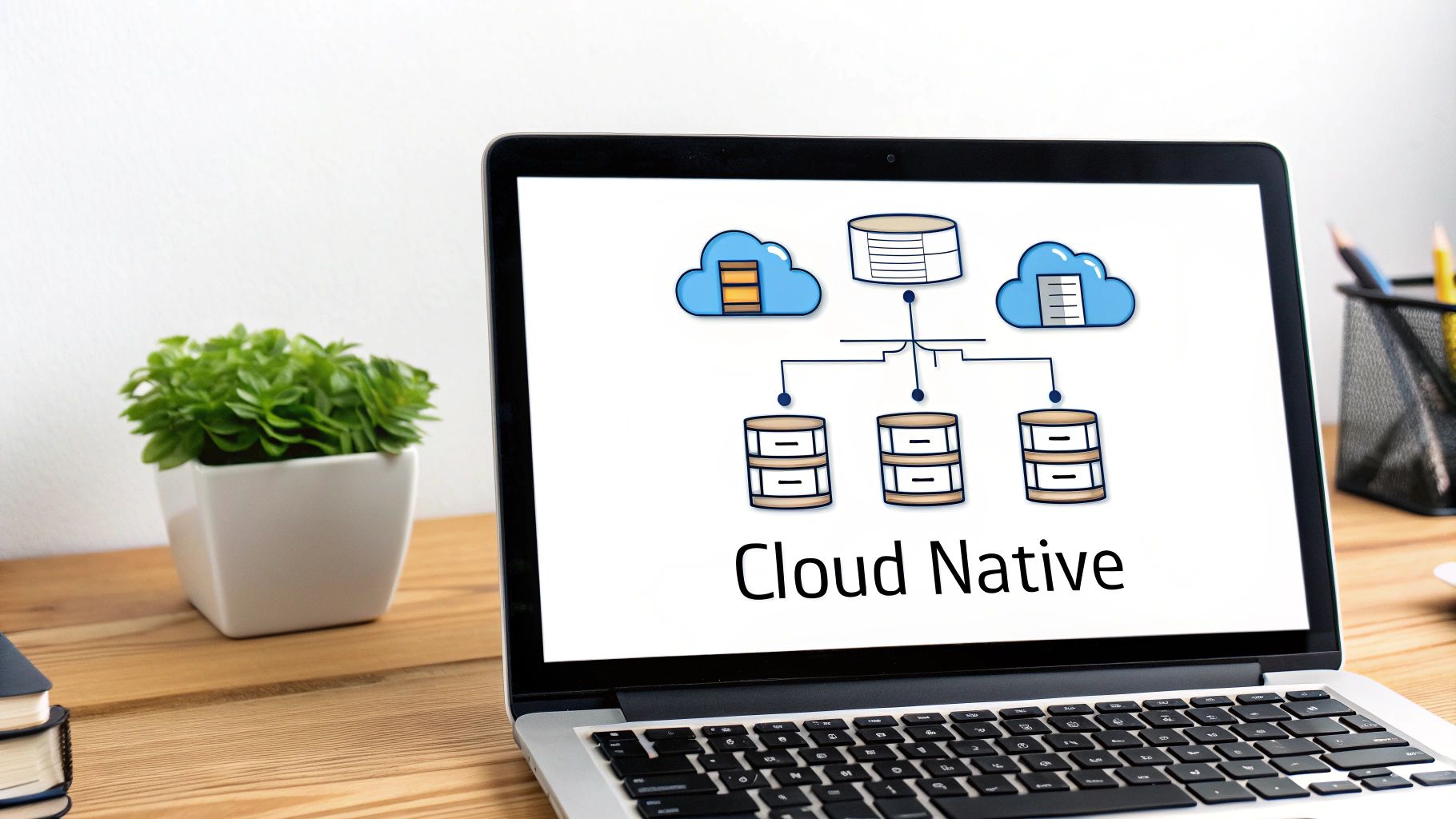
This architectural shift directly enables business agility and cost efficiency. For example, Netflix pioneered this model, migrating its entire infrastructure to the cloud to support massive global scale and enable hundreds of deployments per day with minimal downtime. By embracing cloud-native principles, organizations can reduce infrastructure complexity, accelerate innovation cycles, and pay only for the resources they consume, turning capital expenditures into predictable operational costs.
Implementation and Success Metrics
Transitioning to a cloud-native model is one of the most impactful digital transformation best practices, but it requires a careful, phased strategy to minimize disruption and maximize returns. The process starts with a clear-eyed assessment of your application portfolio and business priorities.
- Actionable Tips:
- Assess Cloud Readiness: Evaluate your current applications against key criteria to determine which are prime candidates for a quick "lift-and-shift" migration versus those requiring deeper refactoring.
- Prioritize for Quick Wins: Begin with less complex, non-critical workloads to build momentum, prove value, and refine your migration processes.
- Embrace Containerization: Use technologies like Docker and Kubernetes to standardize application packaging and deployment, ensuring consistency across development, testing, and production environments.
- Implement Cloud Cost Management: Establish robust practices for monitoring, managing, and optimizing cloud spend from day one to avoid budget surprises.
A common pitfall is treating cloud migration as a purely technical "lift-and-shift" exercise. The true value is unlocked when you re-architect applications to fully leverage the cloud's elasticity, scalability, and managed services.
At Dr3amsystems, our Dr3am Cloud services provide end-to-end support for your cloud journey. Backed by executive testimonials, we help you devise a secure, efficient migration strategy, modernize your applications for peak performance, and manage your cloud environment to ensure it remains cost-effective and resilient. Learn more about our proven cloud migration best practices to start your transition with confidence.
3. Implement AI & Machine Learning for Process Automation
Leveraging Artificial Intelligence (AI) and Machine Learning (ML) is a pivotal step in modern digital transformation, moving beyond basic automation to create intelligent, self-optimizing systems. This practice involves deploying algorithms to handle repetitive tasks, enhance decision-making with predictive analytics, and unlock new business value from data. It's about empowering the organization to operate faster, reduce errors, and gain insights that were previously impossible to uncover.

This goes far beyond simple chatbots. Industry leaders demonstrate its power: JPMorgan Chase's COiN platform drastically reduced contract review time using natural language processing, while UPS's ORION algorithm optimizes delivery routes, saving millions of miles annually. Adopting AI and ML transforms core operations from reactive to predictive, creating a significant and sustainable competitive advantage.
Implementation and Success Metrics
Successfully integrating AI is one of the most impactful digital transformation best practices, but it requires a strategic, data-centric approach. The goal is to solve specific business problems, not just deploy technology for its own sake.
- Actionable Tips:
- Start with High-Impact Use Cases: Identify data-rich, repetitive processes where automation can deliver quick, measurable wins and build momentum for broader adoption.
- Establish Data Governance: Ensure data quality and accessibility before implementation. An ML model is only as good as the data it's trained on.
- Build Cross-Functional Teams: Combine domain experts who understand the business context with data scientists and ML engineers to build effective and relevant solutions.
- Prioritize Responsible AI: Implement practices for fairness, transparency, and bias detection from the outset to build trust and mitigate risks.
A common pitfall is treating AI as a pure replacement for human roles. The greatest value often comes from augmentation, where AI handles the repetitive analysis and frees up human experts to focus on strategic, high-value decision-making.
At Dr3amsystems, our Dr3am AI services help you navigate the complexities of AI implementation. We identify high-ROI automation opportunities, build robust data pipelines, and deploy custom ML models that align with your business goals. Our pragmatic, results-focused approach delivers measurable outcomes, such as 60% reductions in processing time, ensuring you can implement AI responsibly and effectively to accelerate business outcomes.
4. Strengthen Cybersecurity & Zero-Trust Architecture
As digital transformation expands the corporate network perimeter to include cloud services, remote workers, and IoT devices, traditional security models are no longer sufficient. Adopting a Zero-Trust architecture is essential for protecting sensitive assets. This modern security framework operates on the principle of "never trust, always verify," treating every access request as a potential threat, regardless of its origin.
This approach moves beyond perimeter-based defense and enforces strict identity verification, microsegmentation, and least-privilege access for every user and device. By assuming a breach is inevitable, Zero-Trust minimizes the potential impact by containing threats and preventing lateral movement across the network. Pioneered by models like Google's BeyondCorp, this framework is now a cornerstone for securing modern, distributed enterprises against sophisticated cyberattacks and meeting stringent regulatory requirements.
Implementation and Success Metrics
Implementing a Zero-Trust model is one of the most impactful digital transformation best practices for building resilience. The process requires a shift from a location-centric to an identity-centric security posture, where access is continuously validated.
- Actionable Tips:
- Map All Assets and Data Flows: Before implementation, create a comprehensive inventory of all users, devices, applications, and data to understand access patterns and define security policies.
- Implement Multi-Factor Authentication (MFA): Enforce MFA universally, especially for administrative accounts and access to critical systems, to add a vital layer of identity verification.
- Leverage Microsegmentation: Divide your network into small, isolated zones to prevent attackers from moving laterally if one segment is compromised.
- Automate Threat Detection: Use AI and machine learning tools to continuously monitor activity, detect anomalies, and respond to potential threats in real time.
A common pitfall is treating Zero-Trust as a single product purchase. It is an iterative strategic initiative that requires a cultural shift and the integration of multiple technologies across identity, endpoints, and networks.
At Dr3amsystems, our Dr3am Security services help you design and implement a Zero-Trust framework tailored to your environment. We conduct comprehensive risk assessments, deploy advanced security controls, and provide continuous monitoring to protect your critical assets. Explore our cybersecurity solutions for businesses to build a more resilient and secure digital infrastructure while keeping critical operations running smoothly.
5. Build a Data-Driven Culture with Analytics & BI Platforms
True digital transformation is fueled by insights, not intuition. This practice involves embedding analytics and business intelligence (BI) into the fabric of your organization, enabling decisions at every level to be backed by data. It moves beyond static reports by democratizing access to modern BI platforms, empowering teams to explore data, uncover trends, and respond to market changes with agility and precision.
By fostering data literacy and providing the right tools, businesses can unlock immense value hidden within their operational systems. Companies like Netflix leverage this approach to make multi-million dollar content decisions, while Uber uses real-time analytics to optimize its global logistics network. This shift transforms data from a historical record into a strategic asset that actively drives competitive advantage, operational efficiency, and customer-centric innovation.
Implementation and Success Metrics
Cultivating a data-driven culture is one of the most powerful digital transformation best practices for creating sustainable growth. The goal is to make data accessible, understandable, and actionable for everyone, not just a small team of analysts.
- Actionable Tips:
- Start with Executive Buy-In: Begin by creating high-impact dashboards focused on key business metrics that matter to leadership, demonstrating immediate value.
- Prioritize Data Governance: Implement clear standards for data quality, access, and security before scaling your analytics initiatives to ensure trust and consistency.
- Invest in Data Literacy: Launch ongoing training programs to equip employees with the skills to interpret data, ask the right questions, and use BI tools effectively.
- Democratize Access Carefully: Use role-based permissions to provide teams with self-service access to relevant data, fostering autonomy while maintaining security.
A common pitfall is deploying powerful BI tools without investing in the underlying data infrastructure and culture. Without clean, reliable data and a workforce trained to use it, even the best platforms become expensive, underutilized assets.
At Dr3amsystems, our Dr3am AI and data engineering services help you build the foundation for a data-driven culture. We design and implement robust systems that feed your BI platforms, deploying data pipelines and machine learning to turn your data into a strategic advantage. Learn more about how we design and deploy data pipelines that power enterprise-grade analytics.
6. Modernize Legacy Systems with Strategic Refactoring
Digital transformation is often stalled by monolithic legacy systems that are costly to maintain, difficult to update, and incompatible with modern cloud-native architectures. A "big bang" replacement is risky and disruptive. Strategic refactoring offers a pragmatic alternative, allowing organizations to systematically modernize core applications incrementally, reducing technical debt while ensuring business continuity and accelerating innovation.
This approach involves breaking down monolithic systems into smaller, manageable microservices using proven techniques like the strangler fig pattern. As seen in transformations at Etsy and PayPal, this method gradually replaces old functionality with new, API-driven services. This de-risks the modernization process, enables faster delivery cycles, and builds a more resilient, scalable, and adaptable technology foundation. It turns a massive, overwhelming project into a series of achievable, value-driven steps.
Implementation and Success Metrics
Implementing a strategic refactoring plan is one of the most impactful digital transformation best practices for enterprises burdened by technical debt. The goal is to modernize without interrupting critical business operations.
- Actionable Tips:
- Assess and Prioritize: Analyze your application portfolio to identify high-impact, low-risk candidates for initial refactoring. Focus on modules that are bottlenecks or require frequent changes.
- Adopt the Strangler Fig Pattern: Implement a proxy that intercepts requests to the legacy system. Gradually route traffic for specific functions to new microservices until the old system is fully "strangled" and can be retired.
- Establish Clear Architecture Patterns: Define standards for API design, data management, and inter-service communication to ensure consistency and prevent creating a new, distributed monolith.
- Implement Comprehensive Automated Testing: Build a robust suite of automated tests before, during, and after refactoring to validate functionality and prevent regressions.
The most common failure is attempting to refactor without a clear architectural vision or sufficient automated testing. Without these guardrails, teams risk introducing new complexities and breaking critical business logic, undermining the entire modernization effort.
At Dr3amsystems, our Dr3am Cloud and Dr3am IT services specialize in executing these complex modernization initiatives. We help you assess your legacy landscape, design a phased refactoring roadmap using proven patterns, and manage the migration to a modern, cloud-native architecture with zero downtime, ensuring your systems become enablers of future growth.
7. Adopt Agile, DevOps & Continuous Delivery
Modern digital transformation requires speed and resilience, which traditional, siloed development models cannot provide. Adopting Agile methodologies, DevOps culture, and continuous delivery (CI/CD) practices breaks down barriers between development and operations teams. This integrated approach creates a high-velocity feedback loop, enabling organizations to deliver value to customers faster, more frequently, and with greater reliability.
This fusion of practices accelerates time-to-market while simultaneously improving service stability. By embracing automation, iterative development, and a culture of shared responsibility, businesses can innovate at the pace of market leaders like Netflix and Amazon, who famously execute thousands of deployments daily. It shifts the focus from large, infrequent, and high-risk releases to small, incremental updates that are safer and more manageable, making it one of the most vital digital transformation best practices for building a competitive edge.
Implementation and Success Metrics
Implementing Agile and DevOps is a cultural and technological shift that aligns teams around the goal of rapid, reliable software delivery. It involves automating the build, test, and deployment pipeline to remove manual bottlenecks and reduce human error.
- Actionable Tips:
- Start with a Pilot: Select a single, motivated team to pilot Agile and DevOps practices. Use their successes and learnings to create a blueprint for enterprise-wide adoption.
- Automate the Pipeline: Implement CI/CD tools to automate builds, testing, and deployments. Establish quality gates to ensure code meets standards before progressing.
- Adopt Infrastructure as Code (IaC): Use tools like Terraform or CloudFormation to provision and manage infrastructure programmatically, ensuring consistent and reproducible environments.
- Implement Feature Flags: Decouple deployment from release by using feature flags, allowing teams to safely test new functionality in production before making it visible to all users.
A common pitfall is focusing solely on tools without fostering the underlying collaborative culture. DevOps is not just a toolchain; it's a mindset of shared ownership, continuous learning, and blameless post-mortems that enables teams to build and run resilient systems.
At Dr3amsystems, our Dr3am Cloud services help you build and manage automated CI/CD pipelines and IaC environments. We provide expert guidance and hands-on execution to accelerate your delivery lifecycle, enabling continuous improvement while ensuring security, reliability, and cost efficiency.
8. Establish Enterprise-Grade Managed Hosting & Infrastructure
A critical component of a modern digital strategy is shifting the operational burden of infrastructure management to a specialized provider. This involves adopting professionally managed hosting services to handle uptime, security, backups, disaster recovery, and compliance. Offloading these complex, non-differentiating tasks allows internal technology teams to stop managing servers and instead focus their valuable time on developing applications and features that directly drive business growth.
This approach ensures that your critical systems are supported by expert engineers using best-in-class tools and processes, leading to higher reliability and a stronger security posture. For example, AWS Managed Services and Google Cloud's managed Kubernetes service abstract away immense infrastructure complexity, enabling organizations to scale confidently. By leveraging a managed infrastructure partner, businesses gain access to enterprise-grade resilience and performance without the massive capital expenditure and talent acquisition challenges of building it in-house.
Implementation and Success Metrics
Partnering with a managed hosting provider is one of the most impactful digital transformation best practices for achieving operational excellence and agility. The key is to select a partner whose SLAs and capabilities align perfectly with your business requirements for performance, security, and support.
- Actionable Tips:
- Evaluate Reliability SLAs: Scrutinize a provider’s uptime track record, service level agreements (SLAs), and documented disaster recovery procedures.
- Prioritize Security & Compliance: Choose providers with robust security certifications (e.g., SOC 2, ISO 27001) relevant to your industry and data governance needs.
- Implement a Multi-Region Architecture: Work with your provider to design a resilient infrastructure that can withstand regional outages.
- Establish Clear Escalation Procedures: Document runbooks and define clear incident response SLAs with your managed provider to ensure rapid resolution.
A common pitfall is treating managed hosting as a simple commodity. The right partner acts as an extension of your team, providing proactive monitoring, cost optimization advice, and strategic guidance, not just reactive support.
At Dr3amsystems, our Dr3am Hosting services provide fully managed, enterprise-grade infrastructure designed for performance, security, and scalability. With dedicated managed support, we handle the operational complexities of cloud management, from 24/7 monitoring to zero-downtime transitions, so your team can focus on innovation.
9. Design Customer-Centric Digital Experiences
Digital transformation is ultimately about delivering superior value to the customer. This practice shifts the focus from internal processes or technology for its own sake to creating intuitive, frictionless, and personalized digital experiences. It involves deeply understanding user needs through research, applying design thinking methodologies, and continuously iterating based on user feedback and behavior data. Without a customer-centric lens, technology investments risk creating solutions that are powerful but unusable, leading to low adoption, customer churn, and a failure to capture market share.
This user-first philosophy is the engine behind the world's most successful digital-native companies. Amazon’s obsessive focus on reducing checkout friction, Netflix's personalization algorithms that drive engagement, and Airbnb's seamless booking interface all demonstrate that a superior user experience (UX) is a formidable competitive advantage. By mapping and optimizing the entire customer journey, organizations can reduce friction, build loyalty, and significantly increase customer lifetime value.

Implementation and Success Metrics
Embedding customer-centricity is one of the most impactful digital transformation best practices, as it directly correlates technology with revenue and retention. The process requires a cultural shift towards empathy and a commitment to data-driven design decisions.
- Actionable Tips:
- Conduct User Research: Go beyond surveys. Engage directly with real customers through interviews and usability testing to uncover unmet needs and pain points.
- Create Detailed Journey Maps: Visualize every touchpoint a customer has with your brand, identifying friction points and opportunities for digital enhancement.
- Implement A/B Testing: Use controlled experiments to validate design changes and ensure that new features demonstrably improve key metrics like conversion or engagement.
- Optimize for Mobile-First: Design experiences for the smallest screen first to ensure accessibility and performance where most users interact with your brand today.
A common pitfall is assuming you know what the customer wants. True customer-centricity is built on a foundation of continuous listening, testing, and iterating, replacing internal assumptions with real-world user data.
At Dr3amsystems, our Dr3am Marketing and application development services integrate UX/UI best practices from the start. We help you conduct user research, build intuitive interfaces, and implement feedback loops to ensure your digital products not only function flawlessly but also delight your customers and drive business growth through ongoing optimization.
10. Create a Technology & Talent Strategy for Continuous Learning
Digital transformation is fundamentally a human endeavor, where success depends less on the technology itself and more on the people who build, manage, and use it. An advanced technology stack is ineffective without a skilled and adaptable team to leverage it. This practice involves deliberately investing in your people by creating a culture of continuous learning, upskilling, and knowledge sharing that aligns with your technology roadmap.
By fostering an environment where talent can thrive, organizations ensure their teams have the necessary skills to support new initiatives. This approach, championed by companies like Netflix with its famous 'Culture Deck' and Amazon with its extensive upskilling programs, transforms the workforce into a dynamic asset. It ensures that as technology evolves, your team's capabilities evolve with it, creating a sustainable competitive advantage built on expertise and innovation.
Implementation and Success Metrics
Cultivating a learning culture is one of the most impactful digital transformation best practices. It requires a strategic commitment to talent development that goes beyond occasional training sessions, embedding learning into the daily workflow.
- Actionable Tips:
- Establish Clear Skill Roadmaps: Define the technical competencies required for each role and create clear progression pathways so employees know what to learn next.
- Budget for Learning: Allocate a dedicated portion of engineering time (5-10%) for non-project work, such as learning, experimentation, and professional development.
- Create Communities of Practice: Foster internal groups focused on key technologies like AI, cloud architecture, or cybersecurity to encourage peer-to-peer knowledge sharing.
- Implement Mentorship Programs: Pair senior and junior team members to accelerate skill acquisition and reinforce best practices through peer code reviews and guidance.
A common pitfall is viewing training as a one-time event. True upskilling is a continuous process that integrates learning into the organizational culture, empowering teams to experiment and adapt without fear of failure.
At Dr3amsystems, our Dr3am IT strategic services include talent assessment and development planning. We help you identify critical skill gaps and design learning programs that ensure your team is equipped to execute your digital transformation roadmap with confidence and excellence.
10-Point Comparison of Digital Transformation Best Practices
| Initiative | Implementation Complexity 🔄 | Resource Requirements 💡 | Expected Outcomes ⭐ | Ideal Use Cases ⚡ | Key Advantages 📊 |
|---|---|---|---|---|---|
| Establish Clear Digital Strategy & Governance Framework | High — cross-functional planning and governance setup | Significant — executive time, consultants, analytics | ⭐ High — alignment, measurable KPIs, reduced risk | Enterprise-wide transformations; CTO/COO-led programs | Provides direction for investments; stakeholder buy-in; clearer ROI |
| Adopt Cloud-Native Architecture & Migration Strategy | High — architectural redesign and phased migration | High — cloud spend, DevOps skills, tooling | ⭐ High — scalability, resilience, faster delivery | Legacy monoliths needing scale, cost-efficiency, agility | Scalability, pay-as-you-go costs, easier updates and resilience |
| Implement AI & Machine Learning for Process Automation | Medium–High — model building, data pipelines, ops | High — quality data, ML talent, compute resources | ⭐ High — automation, accuracy, predictive insights (ROI medium-term) | High-volume repetitive tasks, forecasting, intelligent automation | Reduces errors and processing time; uncovers new insights/revenue |
| Strengthen Cybersecurity & Zero-Trust Architecture | High — careful architecture and continuous verification | High — IAM, monitoring tools, security experts | ⭐ High — reduced breach impact, compliance readiness | Regulated industries, sensitive data, distributed workforce | Improved security posture, lower MTTR, compliance support |
| Build a Data-Driven Culture with Analytics & BI Platforms | Medium — platform rollout and governance | Significant — data platforms, BI tools, training | ⭐ High — faster informed decisions, revenue opportunities | Organizations with large data volumes needing insights | Democratizes insights, enables experimentation, better decisions |
| Modernize Legacy Systems with Strategic Refactoring | Medium–High — incremental refactor and hybrid complexity | Significant — architects, engineering effort, testing | ⭐ High — reduced technical debt, improved delivery velocity | Aging tech stacks limiting agility and velocity | Gradual risk-managed modernization; long-term cost reduction |
| Adopt Agile, DevOps & Continuous Delivery | Medium–High — cultural change and process overhaul | Significant — training, automation tooling, DevOps staff | ⭐ High — faster time-to-market, improved reliability | Product/engineering teams prioritizing rapid iteration | Rapid feedback loops, lower lead time, improved collaboration |
| Establish Enterprise-Grade Managed Hosting & Infrastructure | Low–Medium — vendor selection and integration | Moderate — Opex, vendor SLAs, vendor management | ⭐ High — uptime, resilience, managed compliance | Teams without infra ops; startups scaling quickly | Removes ops burden; predictable costs; strong SLAs and DR |
| Design Customer-Centric Digital Experiences | Medium — iterative research, testing and alignment | Moderate–High — UX researchers, designers, testing tools | ⭐ High — increased conversion, retention, NPS | Customer-facing apps, e‑commerce, SaaS products | Higher engagement and retention; competitive differentiation |
| Create a Technology & Talent Strategy for Continuous Learning | Medium — program design and cultural adoption | Significant — training budgets, mentorship, time allocation | ⭐ High — improved skills, retention, productivity | Organizations competing for technical talent; growth firms | Builds internal expertise, reduces external dependency, improves morale |
Your Partner in Transformation: From Strategy to Execution
Navigating the complexities of digital transformation is an ongoing journey, not a final destination. The best practices detailed in this guide, from establishing a clear strategy to fostering a culture of continuous learning, provide a comprehensive roadmap for success. Embracing these principles is the first step toward building a more agile, resilient, and competitive organization. However, the path from blueprint to reality is filled with technical hurdles, resource constraints, and strategic pivots that demand expert guidance.
True transformation is not achieved by adopting technology for its own sake. It is realized when every initiative, whether a cloud migration, an AI implementation, or a security overhaul, is directly tied to measurable business outcomes. This is the core philosophy that separates successful transformations from expensive failures. The most critical takeaway is that strategy, technology, and execution must be woven together into a single, cohesive effort.
From Theory to Tangible Value
The digital transformation best practices we have explored are not isolated tactics; they are interconnected components of a holistic business evolution. A cloud-native architecture (Practice #2) enables the scalability required for effective AI and machine learning models (Practice #3). A robust data-driven culture (Practice #5) fuels the insights needed to design customer-centric experiences (Practice #9). And underlying it all, a Zero-Trust security framework (Practice #4) and agile methodologies (Practice #7) ensure that innovation can proceed securely and at pace.
The challenge lies in orchestrating these elements simultaneously. This requires not just a vision, but a partner with the specialized expertise to translate that vision into reality. This is where Dr3amsystems becomes your strategic asset. Our dedicated practices—Dr3am IT, Dr3am Cloud, Dr3am AI, Dr3am Security, Dr3am Hosting, and Dr3am Marketing—are designed to de-risk your most critical initiatives and accelerate your time-to-value with a pragmatic, results-focused approach.
Actionable Next Steps on Your Transformation Journey
Mastering these concepts is paramount because they represent the new operational standard for industry leaders. The ability to leverage data, automate processes, and scale securely is no longer a competitive advantage, it is a baseline for survival and growth. Your next steps should focus on turning these insights into a concrete action plan.
- Assess Your Maturity: Conduct an honest evaluation of where your organization stands against each of the ten best practices. Identify your most significant gaps and your most promising opportunities.
- Prioritize for Impact: You cannot tackle everything at once. Pinpoint one or two key areas that will deliver the most significant business impact in the next 6-12 months. This could be modernizing a critical legacy system or automating a high-cost manual process.
- Build Your Business Case: Frame your prioritized initiatives in terms of ROI, cost reduction, and competitive positioning. Secure executive buy-in by demonstrating a clear link between the technology investment and strategic business goals.
- Engage an Expert Partner: Avoid common pitfalls and accelerate your progress by partnering with a team that has navigated these challenges before. An expert partner provides not just technical execution but also strategic guidance to ensure your roadmap is both ambitious and achievable.
Digital transformation is a marathon, but each step forward builds momentum. By focusing on these digital transformation best practices and aligning with a partner dedicated to your success, you can move confidently from strategy to execution, unlocking new levels of efficiency, innovation, and growth.
Ready to turn your transformation roadmap into reality? Partner with Dr3amsystems to leverage our enterprise-grade expertise in AI-driven automation, secure cloud migration, and managed services. Schedule your free consultation today to discover how we can help you accelerate outcomes and achieve measurable results on your digital journey.