
Migrating to the cloud is no longer a question of 'if,' but 'how' and 'how well.' A successful transition can unlock unprecedented scalability, efficiency, and innovation, but the path is often fraught with technical debt, unforeseen costs, and operational disruption. Getting it right separates market leaders from the competition. This article moves beyond generic case studies to provide a strategic playbook based on real-world cloud migration success stories.
We will dissect 10 landmark projects from companies like Netflix, Capital One, and Adobe, uncovering the specific blueprints that propelled them forward. You will learn about the precise business drivers that initiated their moves, the technical architectures they implemented, and the measurable outcomes they achieved. We will analyze diverse approaches, from pragmatic lift-and-shift tactics to transformative application refactoring for cloud-native performance. Each example is broken down into actionable lessons, replicable strategies, and the critical challenges they overcame to achieve their goals.
These blueprints provide a powerful starting point, but every organization's journey is unique. Translating these lessons into a tailored roadmap requires deep expertise in both technology and business strategy. A partner like Dr3amsystems can be instrumental, specializing in secure, AI-driven cloud migrations that ensure zero-downtime transitions. By providing dedicated managed support and strategic guidance, they help turn ambitious cloud goals into tangible business value with measurable results like 60% reductions in processing time. For technology leaders planning their own migration, this analysis offers a direct line to proven methods for achieving similar breakthroughs.
1. Airbnb's Migration to Microservices and Multi-Cloud Architecture
Airbnb's journey from a monolithic application to a distributed microservices architecture stands as one of the most cited cloud migration success stories for its strategic foresight and technical execution. Initially, a single, large codebase managed all functions, but this became a bottleneck as the company scaled, slowing down development and hindering scalability. The migration was driven by the need to support exponential growth, accelerate feature deployment, and improve system resilience.
Strategic Approach and Technical Execution
The core of Airbnb's strategy was decomposing their massive application into smaller, independent services. They adopted a Domain-Driven Design (DDD) approach to define clear boundaries for services like Payments, Search, and Bookings. This allowed teams to develop, deploy, and scale their services independently.
Technically, the migration leaned heavily on containerization with Docker and orchestration with Kubernetes. This combination provided a consistent environment for services to run across a multi-cloud infrastructure, enhancing portability and avoiding vendor lock-in. For example, their search and discovery service could scale independently to handle massive traffic spikes during peak seasons without affecting the payment processing service, which was isolated for maximum security and reliability.
Actionable Takeaways and Key Lessons
For technology leaders planning a similar transformation, Airbnb’s journey offers a clear blueprint.
- Implement Comprehensive Observability First: Before migrating, establish robust monitoring, logging, and tracing. You cannot manage what you cannot see, especially in a distributed system.
- Use Feature Flags for Controlled Rollouts: De-risk the migration by using feature flags to gradually shift traffic from the old monolith to new microservices, allowing for real-time performance validation.
- Invest in a Robust API Gateway: An API gateway is crucial for managing routing, authentication, and communication between dozens or hundreds of microservices.
Successfully navigating such a complex migration requires deep expertise in both cloud architecture and DevOps. Partnering with a technology expert like Dr3amsystems can de-risk the process and accelerate outcomes. For organizations looking to build resilient, scalable systems, exploring custom cloud-native application development can provide the expert guidance needed to mirror Airbnb's success and ensure a smooth, zero-downtime transition.
2. Netflix's Cloud-Native Transformation and Zero-Downtime Migration
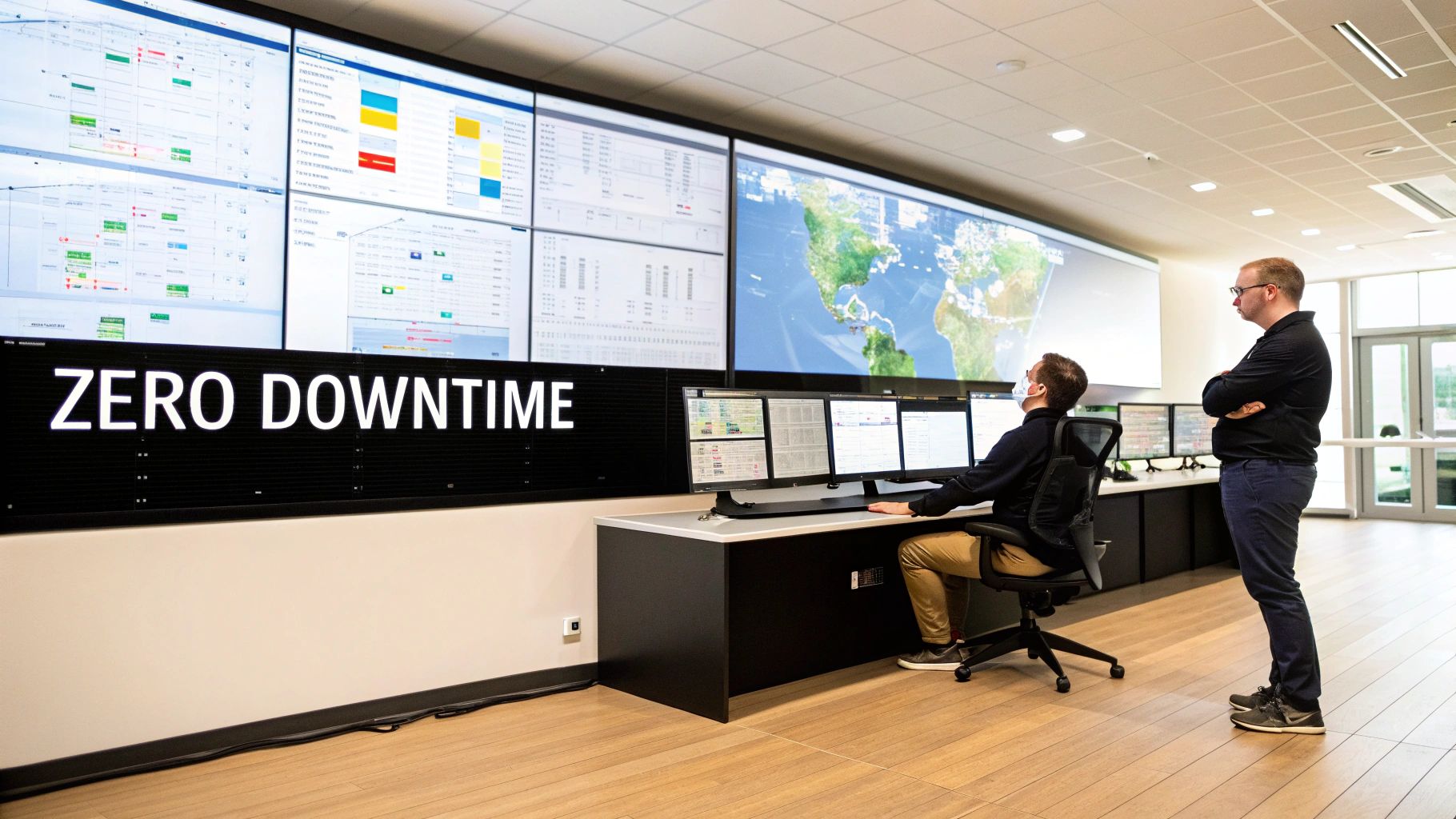
Netflix's seven-year journey from its own data centers to a fully cloud-native architecture on AWS is a legendary case study among cloud migration success stories. The move was sparked by a major database corruption event in 2008 that highlighted the risks of a single point of failure. The goal was to achieve extreme resilience, massive scalability for global expansion, and faster engineering velocity, all while maintaining 24/7 service availability for millions of subscribers.
Strategic Approach and Technical Execution
Netflix adopted a "cloud-native" mindset from the start, re-architecting its monolithic application into hundreds of fine-grained microservices. This decoupled architecture allowed teams to innovate and deploy features independently, dramatically accelerating development cycles. Their migration strategy was methodical, using the "strangler fig" pattern to incrementally migrate functionality from the legacy data centers to the cloud without disrupting the user experience.
The company famously pioneered the practice of Chaos Engineering, using tools like Chaos Monkey to proactively and randomly terminate instances in their production environment. This forced engineers to build services that were inherently resilient to failure. This culture of designing for failure, combined with heavy automation for infrastructure management, enabled them to handle unpredictable viewing patterns and regional outages gracefully while scaling across more than 190 countries.
Actionable Takeaways and Key Lessons
For technology leaders aiming for high availability and resilience, Netflix's approach provides invaluable lessons.
- Design for Failure, Not Against It: Assume components will fail and build systems that can withstand and recover from outages automatically.
- Invest Heavily in Automation: At cloud scale, manual infrastructure management is impossible. Automate everything from provisioning and deployment to failure recovery.
- Migrate Incrementally and Validate: Use a gradual approach like the strangler fig pattern to move functionality piece by piece, validating each step before proceeding.
Executing a zero-downtime migration at scale requires deep expertise in cloud architecture and automation. Partnering with a specialist like Dr3amsystems ensures that complex transitions are managed without impacting business operations. To learn how expert guidance can secure your cloud journey, explore a partner-led cloud migration and management approach that prioritizes reliability and performance.
3. GE Digital's Hybrid Cloud Migration for Industrial IoT
GE Digital's transformation of its Predix platform is a leading example of cloud migration success stories within the industrial sector. The initiative was born from the need to merge the rigid, real-time demands of operational technology (OT) in manufacturing with the flexibility of IT cloud infrastructure. GE's challenge was to process vast amounts of sensor data from industrial assets like wind turbines and power plant equipment to deliver predictive maintenance and optimization services at scale.

Strategic Approach and Technical Execution
GE Digital adopted a hybrid cloud architecture, a strategic necessity for bridging legacy on-premise systems with modern cloud services. This model allowed them to balance security, latency, and compliance requirements critical for industrial clients. The core of their technical execution involved deploying edge computing gateways on the factory floor to process time-sensitive data locally. This reduced latency for critical decisions and minimized data transmission costs.
For instance, sensor data from a manufacturing line could be analyzed at the edge to detect quality control anomalies in real-time, triggering immediate alerts. Less critical, aggregated data was then securely transmitted to a centralized cloud platform for long-term analysis, trend modeling, and predictive maintenance scheduling. This tiered approach ensured that OT systems remained responsive while leveraging the cloud’s powerful data processing capabilities.
Actionable Takeaways and Key Lessons
For leaders managing industrial operations, GE Digital’s migration provides a powerful model for digital transformation.
- Prioritize Edge Computing for Real-Time Needs: Don’t send all data to the cloud. Process time-critical operational data locally to ensure low latency and continuous operation, even with intermittent connectivity.
- Bridge Legacy and Modern Systems with a Hybrid Model: A hybrid cloud provides a practical path for modernizing industrial environments without a disruptive "rip and replace" of existing, functional OT systems.
- Design for Stringent Security and Data Isolation: Industrial clients demand robust security. Implement a security-first design that isolates customer data and protects critical operational infrastructure from external threats.
Successfully integrating OT and IT requires specialized expertise in both domains. Partnering with a technology expert can navigate the complexities of industrial IoT and hybrid cloud deployments. For organizations looking to optimize operations, exploring managed IT services and strategy from a provider like Dr3amsystems can provide the dedicated support needed to build a secure, efficient, and scalable industrial cloud platform.
4. Schneider Electric's Digital Transformation and EcoStruxure Migration
Schneider Electric's move to a cloud-first architecture with its EcoStruxure platform is a leading example of how traditional industrial giants can pivot to become digital service providers. This initiative represents one of the most compelling cloud migration success stories in the B2B and industrial IoT space. The primary driver was the need to transform from a product-centric company into a solutions provider, offering real-time energy management, sustainability monitoring, and predictive analytics to enterprise customers.
Strategic Approach and Technical Execution
Schneider Electric’s strategy focused on creating an open, interoperable, and IoT-enabled platform. They built EcoStruxure as a distributed edge-to-cloud system, leveraging Microsoft Azure as their primary cloud partner. This hybrid approach allowed them to connect millions of on-premise assets, from factory floors to data centers, and process data both at the edge for low-latency decisions and in the cloud for deep analytics and machine learning.
The technical execution involved building a multi-layered architecture. At the edge, controllers and gateways collect data for critical real-time operations, such as smart building energy optimization. This data is then securely ingested into the cloud, where it powers a suite of digital services. For instance, a manufacturing facility can use the platform to monitor its sustainability metrics in real-time and identify opportunities for energy reduction, directly contributing to both cost savings and corporate environmental goals.
Actionable Takeaways and Key Lessons
Schneider Electric's digital transformation offers a practical roadmap for industrial companies looking to harness the cloud.
- Build an Open Ecosystem with APIs: Create open APIs to allow partners and customers to build on your platform, fostering innovation and increasing adoption.
- Use Edge Computing for Real-Time Needs: Don't send everything to the cloud. Process time-sensitive data at the edge to ensure operational reliability and reduce latency for critical systems.
- Prioritize Strong Data Governance: When handling sensitive customer operational data, implementing robust data governance and security protocols from day one is non-negotiable.
This type of large-scale industrial IoT migration requires specialized expertise in both legacy operational technology (OT) and modern cloud infrastructure. For organizations aiming to bridge this gap, leveraging a partner for secure cloud migration and management can provide the necessary strategic guidance to ensure the project delivers tangible business value and operational resilience.
5. Capital One's Cloud-First Banking Transformation
Capital One's decisive move from legacy data centers to a cloud-first model on AWS is one of the most transformative cloud migration success stories in the financial services industry. The migration was not merely a technical upgrade; it was a fundamental business strategy to drive innovation, enhance security, and deliver superior customer experiences. The primary driver was the need to escape the constraints of on-premises infrastructure, which limited their ability to rapidly deploy new products and leverage data at scale.
Strategic Approach and Technical Execution
Capital One’s strategy centered on a complete exit from its data centers, a bold move for a major bank navigating strict regulatory oversight. They engaged with regulators early and transparently, building a robust governance framework to ensure compliance with standards like PCI-DSS. This proactive approach built the confidence needed to move sensitive workloads to the public cloud.
Technically, the bank re-architected applications for the cloud rather than simply lifting and shifting them. They embraced a DevOps culture, using CI/CD pipelines and immutable infrastructure to automate deployments and strengthen security. For instance, their real-time fraud detection systems were rebuilt on AWS to leverage machine learning services, enabling them to analyze millions of transactions instantly and prevent fraud far more effectively than their legacy systems could.
Actionable Takeaways and Key Lessons
For leaders in regulated industries, Capital One's journey provides a masterclass in secure and compliant cloud adoption.
- Engage Regulators as Partners: Initiate discussions with regulatory bodies early to build a shared understanding of compliance requirements and controls in a cloud environment.
- Prioritize a Security-First Mindset: Implement comprehensive security controls, automated compliance checks, and continuous monitoring before migrating critical data.
- Re-skill and Empower Your Teams: Invest heavily in training your engineering and operations teams on cloud-native technologies and DevOps practices to foster a culture of innovation.
Executing a migration of this scale, especially with stringent compliance demands, requires specialized expertise. Partnering with a firm like Dr3amsystems, with its dedicated Dr3am Security practice, can be critical. For organizations aiming to fortify their cloud environment, exploring a comprehensive security assessment can ensure that your architecture meets the highest standards for resilience and compliance, paving the way for a successful transformation.
6. Spotify's Global Infrastructure and Multi-Cloud Strategy
Spotify's move to a sophisticated multi-cloud architecture is a masterclass in hyperscale infrastructure management and one of the most compelling cloud migration success stories. Facing the challenge of serving over 400 million users globally, Spotify transitioned from its on-premise data centers to a distributed model across AWS and Google Cloud. This strategic shift was driven by the need for extreme resilience, global performance consistency, and the flexibility to leverage best-of-breed services from multiple vendors.
Strategic Approach and Technical Execution
Spotify's strategy was not about choosing one cloud over another but about creating a unified, hybrid ecosystem where workloads are placed for optimal performance and cost. They use different providers for different strengths; for example, leveraging Google Cloud's BigQuery for large-scale data analytics while relying on AWS for other core infrastructure components. This allows them to avoid vendor lock-in and engage in cost arbitrage, shifting non-critical workloads to the most economical provider at any given time.
Technically, this is enabled by a deep investment in containerization with Kubernetes, creating a cloud-agnostic deployment fabric. This abstraction layer ensures that services like music catalog processing or real-time personalization can run seamlessly across different environments. Their infrastructure is designed for high availability, with robust failover capabilities that can redirect traffic between cloud providers to maintain service continuity during regional outages.
Actionable Takeaways and Key Lessons
For enterprises managing global operations, Spotify’s multi-cloud model offers a powerful blueprint for resilience and optimization.
- Establish Clear Workload Placement Criteria: Define specific business and technical requirements to decide which cloud is best suited for each application, factoring in cost, performance, and available services.
- Invest in a Unified Control Plane: Use tools like Kubernetes to create a consistent, abstracted layer for deploying and managing applications, regardless of the underlying cloud provider.
- Implement Robust Cost Monitoring: Deploy advanced FinOps tools to track, allocate, and optimize spending across multiple clouds, preventing budget overruns and identifying savings opportunities.
Successfully orchestrating a multi-cloud environment requires deep expertise in cloud architecture, containerization, and cost governance. Partnering with a specialist can simplify this complexity. For organizations aiming to build a resilient and cost-effective multi-cloud strategy, exploring managed cloud services from a partner like Dr3amsystems can provide the expert guidance needed to navigate vendor negotiations, automate workload migration, and achieve operational excellence at scale.
7. Target's Cloud Migration for Retail Innovation and Omnichannel
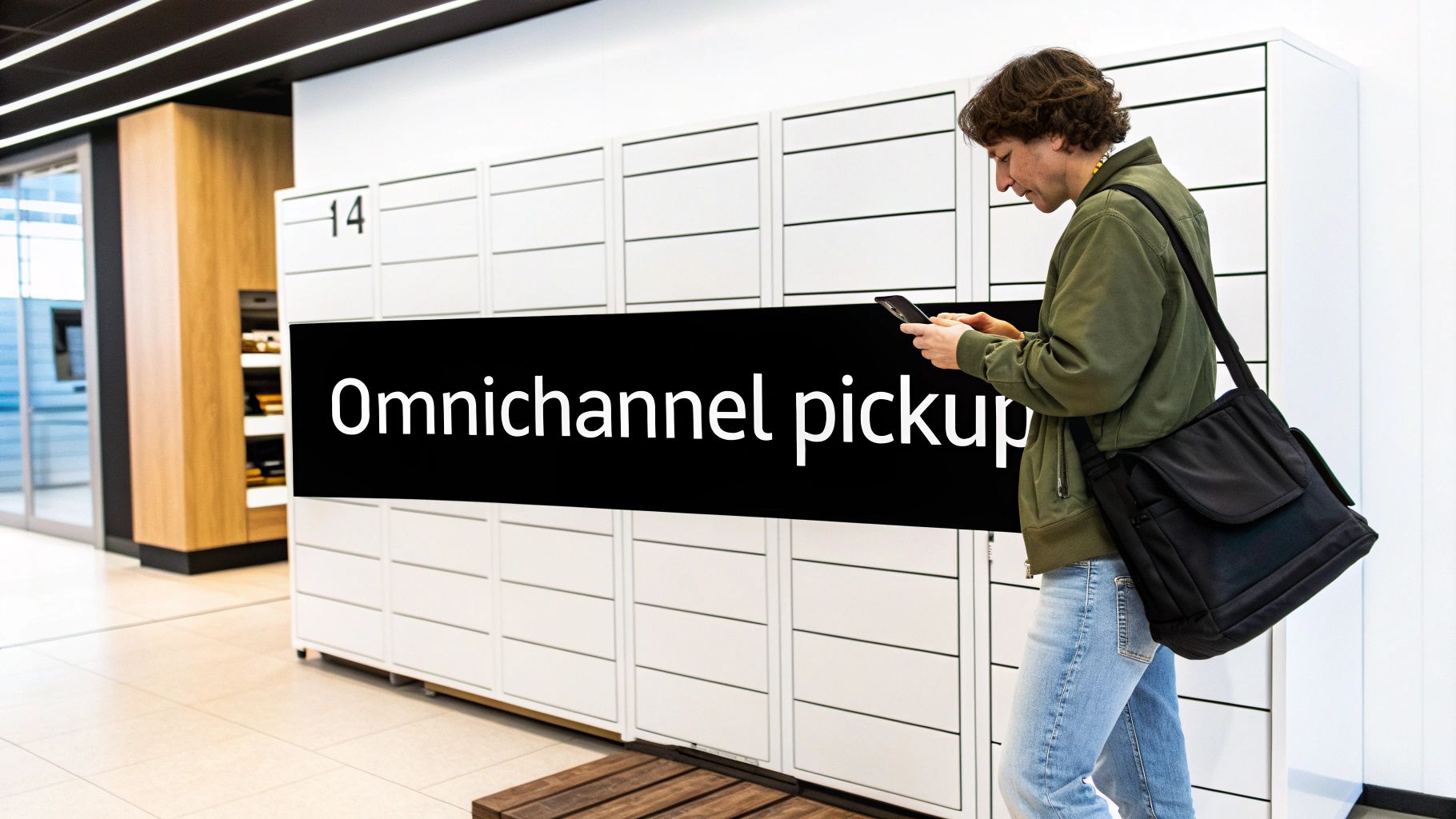
Target's modernization of its technology infrastructure represents one of the most compelling cloud migration success stories in the retail sector. Faced with the challenge of integrating digital and physical shopping experiences, the company moved its core systems, including point-of-sale and inventory management, to a hybrid cloud environment. This strategic shift was driven by the need to support an omnichannel strategy, enabling seamless customer experiences like in-store pickup and real-time inventory visibility.
Strategic Approach and Technical Execution
Target's strategy revolved around building a resilient, scalable platform capable of handling the extreme traffic fluctuations of the retail calendar. The company adopted a hybrid cloud model, keeping some workloads on-premises while leveraging public cloud for elasticity and innovation. This allowed them to modernize legacy applications incrementally while building new cloud-native services for customer-facing features.
A key technical achievement was engineering the new platform for 99.99% uptime, even during Black Friday peaks. This involved extensive use of automation for infrastructure provisioning, chaos engineering to test system resilience, and a gradual rollout approach for new features. For example, their real-time inventory system now accurately tracks products across more than 1,900 stores, powering the popular same-day fulfillment and in-store pickup services directly from their mobile app.
Actionable Takeaways and Key Lessons
For retail and e-commerce leaders, Target’s migration provides a masterclass in modernizing mission-critical systems.
- Prioritize High-Availability from Day One: Retail systems are unforgiving. Design for resilience and implement robust disaster recovery plans before migrating customer-facing or operational workloads.
- Test for Peak Scenarios, Not Averages: Load testing should simulate your busiest day of the year, not a typical Tuesday. This ensures your infrastructure can scale when it matters most.
- Integrate Online and In-Store Systems Tightly: An omnichannel experience depends on a single, unified view of customers, inventory, and orders. Ensure your cloud architecture facilitates this data flow.
Executing a high-stakes migration in a zero-downtime environment requires specialized expertise in cloud architecture and resilient engineering. A technology partner like Dr3amsystems guarantees zero-downtime transitions for mission-critical systems like inventory and POS. For organizations aiming to achieve similar operational excellence, exploring secure cloud migration services provides the strategic guidance and hands-on execution needed to modernize without disrupting business.
8. Slack's Hyperscale Cloud Architecture and Rapid Growth Enablement
Slack's journey is a prime example of a born-in-the-cloud success story, demonstrating how a cloud-native foundation can enable explosive, global-scale growth. Instead of migrating a legacy system, Slack built its infrastructure on AWS from the very beginning, a strategic decision that allowed it to handle a 10x surge in user growth and support millions of concurrent connections with minimal friction. This approach was driven by the need for extreme scalability, real-time performance, and rapid feature innovation.
Strategic Approach and Technical Execution
Slack’s core strategy was to architect for hyperscale from day one by deeply integrating with AWS managed services. This allowed their engineering team to focus on building product features instead of managing underlying infrastructure. Their architecture was designed for resilience and low latency, essential for a real-time collaboration platform where message delivery must be instantaneous.
Technically, Slack's infrastructure relies on a distributed system that can handle millions of simultaneous WebSocket connections, ensuring real-time message delivery across the globe. They heavily utilize Amazon EC2 for compute, S3 for durable storage of files and user data, and an event-driven architecture with services like AWS Lambda for asynchronous processing. This combination allows them to scale discrete parts of their application, like message processing or search indexing, independently and cost-effectively.
Actionable Takeaways and Key Lessons
For startups and high-growth companies aiming to build scalable applications, Slack’s cloud-native approach offers a powerful model.
- Design for Cloud-Native Patterns from Day One: Building with cloud principles like microservices and event-driven architecture from the start prevents costly refactoring later.
- Leverage Managed Services to Reduce Operational Burden: Offload tasks like database management, queuing, and storage to managed cloud services to accelerate development and reduce overhead.
- Implement Automated Scaling Policies: Proactively define scaling rules based on key metrics like CPU usage or connection counts to handle traffic spikes without manual intervention.
Building a resilient, high-performance system capable of supporting millions of users requires specialized cloud architecture and DevOps expertise. Partnering with a specialist can ensure your foundation is built for scale and reliability from the outset. For organizations looking to implement a similar cloud-native strategy, exploring custom cloud-native application development can provide the expert guidance needed to achieve rapid growth and maintain operational excellence.
9. Salesforce's Multi-Tenant Cloud Platform and Global Scalability
Salesforce pioneered the Software-as-a-Service (SaaS) model, and its success is a foundational story in cloud architecture. Rather than a migration, Salesforce built its platform from the ground up on a sophisticated multi-tenant architecture, demonstrating how to design for massive scale from day one. This approach allows millions of organizations, from startups to global enterprises, to share a single, secure infrastructure, a model that remains one of the most powerful cloud migration success stories for its efficiency and scalability. The architecture was engineered to handle immense data volumes while ensuring strict security and performance isolation between customers.
Strategic Approach and Technical Execution
The core of Salesforce's strategy is its unique multi-tenant metadata-driven architecture. Instead of running a separate instance for each customer, all customers share the same application and infrastructure. Customer-specific customizations are stored as metadata, which the platform uses to render a unique application experience for each tenant. This design drastically reduces operational overhead and simplifies updates, as a single code change benefits all customers simultaneously.
Technically, Salesforce implemented strict tenant isolation at every level, from the database to the application logic, to prevent data leakage and performance interference. For example, database queries are automatically rewritten to include a unique OrgID to ensure data is only accessed by the authorized tenant. This advanced engineering allows them to support functions like real-time analytics, custom workflow automation, and collaborative selling tools securely and efficiently for millions of users on a shared platform.
Actionable Takeaways and Key Lessons
For leaders building large-scale SaaS platforms, Salesforce's architectural blueprint offers invaluable lessons.
- Design for Multi-Region Deployment from the Start: Build your architecture to easily deploy across different geographic regions to meet data residency requirements and reduce latency for a global user base.
- Implement Strict Tenant Isolation: Use robust mechanisms like unique tenant identifiers at the database level and in the application logic to ensure data is never co-mingled or exposed between tenants.
- Separate Metadata from Transactional Data: Create a clear architectural separation between customer-specific configuration (metadata) and their operational data. This simplifies platform updates and customizations.
Building a secure, compliant, and scalable multi-tenant architecture requires deep expertise in cloud engineering and enterprise security. Partnering with a specialist like Dr3amsystems can help navigate these complexities effectively. For organizations aiming to build robust enterprise-grade applications, exploring expert-led enterprise services can provide the strategic guidance needed to implement a scalable and secure cloud foundation from the outset.
10. Adobe's Creative Cloud Migration and SaaS Transformation
Adobe's pivot from selling perpetual software licenses to offering the cloud-based Creative Cloud subscription service is a landmark example of business model reinvention powered by the cloud. This strategic shift required a massive infrastructure overhaul, moving desktop-centric applications to a globally distributed, service-oriented architecture. The migration was driven by the need to deliver continuous innovation, enable real-time collaboration, and create a predictable, recurring revenue stream.
Strategic Approach and Technical Execution
Adobe's core strategy involved decoupling its powerful creative tools, like Photoshop and Premiere Pro, from the traditional desktop environment and integrating them with a new cloud backend. This backend handled user authentication, storage, and synchronization, transforming standalone products into an interconnected ecosystem. They re-architected applications to leverage the cloud for features previously impossible, such as cloud-based asset libraries and AI-powered tools (Adobe Sensei).
Technically, this involved building a robust, multi-region cloud infrastructure primarily on AWS to ensure high availability and low latency for a global user base. For example, a video editor using Premiere Pro can now seamlessly share project files and assets with a remote team member, with changes synchronized automatically via Creative Cloud's storage. This required sophisticated data synchronization mechanisms and a scalable architecture to handle immense creative files and complex collaboration workflows.
Actionable Takeaways and Key Lessons
Adobe's successful SaaS transformation offers critical insights for established companies looking to modernize their business model.
- Plan for a Customer Transition: Migrating a loyal user base requires clear communication. Educate customers on the benefits of the new model, like constant updates and new cloud-native features.
- Build a Robust Synchronization Engine: For applications that handle large files or complex data, a reliable and efficient data synchronization mechanism is non-negotiable for a good user experience.
- Maintain Critical Offline Capabilities: Creative professionals often work in environments with unstable internet. Ensure core application functions remain available offline to avoid disrupting critical workflows.
Transitioning an entire product suite and business model to the cloud is a monumental task that demands deep expertise in cloud architecture, data management, and security. Partnering with a specialist can ensure the underlying infrastructure is built for performance and scale. For companies navigating this shift, exploring managed cloud services can provide the necessary strategic guidance and technical execution to ensure a successful, high-impact transformation.
10 Cloud Migration Success Stories — Comparative Overview
| Example | Architecture / Approach | Implementation Complexity 🔄 | Resource Requirements ⚡ | Expected Outcomes ⭐📊 | Ideal Use Cases / Key Advantages 💡 |
|---|---|---|---|---|---|
| Airbnb — Migration to Microservices & Multi‑Cloud | Microservices + containers + Kubernetes across clouds | High — domain decomposition, orchestration, cross‑service consistency | High — DevOps expertise, container platforms, multi‑cloud networking | ⭐⭐⭐⭐ — faster feature delivery, independent scaling, improved resilience | Consumer marketplace scale, rapid feature velocity, reduced vendor lock‑in |
| Netflix — Cloud‑Native & Zero‑Downtime Migration | Cloud‑native, automation, Chaos Engineering, active‑active regions | Very high — long, phased migration with custom tooling | Very high — automation, observability, chaos tooling, global infra | ⭐⭐⭐⭐⭐ — zero‑downtime migration, global low latency, high availability | Global streaming at massive scale; resilience testing and automated rollouts |
| GE Digital — Hybrid Cloud for Industrial IoT | Hybrid (edge + cloud) with OT/IT integration and edge processing | High — legacy OT integration, latency and safety constraints | High — edge devices, secure connectivity, OT expertise | ⭐⭐⭐⭐ — predictive maintenance, asset scale, reduced downtime | Industrial IoT, latency‑sensitive operations, OT/IT convergence |
| Schneider Electric — Edge‑to‑Cloud EcoStruxure | Distributed edge‑to‑cloud, multi‑tenant SaaS, sustainability analytics | High — diverse equipment integration, data governance needs | High — edge compute, APIs, data governance & compliance | ⭐⭐⭐⭐ — energy reductions, real‑time facility visibility, SaaS revenue | Enterprise energy management, sustainability monitoring, B2B integrations |
| Capital One — Cloud‑First Banking Transformation | AWS cloud with strict compliance, zero‑trust security, microservices | High — regulatory validation, secure data migration | High — security controls, compliance tooling, auditability | ⭐⭐⭐⭐ — cost savings, faster deployments, improved security posture | Regulated financial services needing strong compliance and fraud detection |
| Spotify — Global Multi‑Cloud Strategy | Multi‑cloud + on‑prem, automated cost/capacity optimization | High — cross‑cloud orchestration and governance | High — multi‑cloud expertise, cost tools, vendor management | ⭐⭐⭐⭐ — optimized cost/performance, global streaming quality | Hyperscale consumer services prioritizing vendor flexibility and cost arbitrage |
| Target — Retail Cloud for Omnichannel | Clouded POS, unified inventory, ML personalization for retail | High — mission‑critical systems, minimal downtime during migration | High — HA DR, testing, integration with partners and legacy POS | ⭐⭐⭐⭐ — improved inventory accuracy, omnichannel features, peak resilience | Large retailers needing omnichannel, real‑time inventory and high availability |
| Slack — Hyperscale Cloud‑Native Architecture | Cloud‑native from inception, microservices, real‑time messaging | Medium‑High — distributed realtime systems and replication | Medium — managed cloud services, scaling policies, monitoring | ⭐⭐⭐⭐ — seamless scaling, low ops overhead, rapid iteration | Real‑time collaboration platforms built cloud‑native for fast growth |
| Salesforce — Multi‑Tenant SaaS Platform | Multi‑tenant SaaS with global compliance and tenant isolation | High — tenant isolation, performance tuning, compliance | High — platform engineering, audit/logging, capacity planning | ⭐⭐⭐⭐⭐ — scalable SaaS business, efficient resource use, continuous upgrades | Enterprise SaaS with massive tenant scale and strict compliance needs |
| Adobe — Creative Cloud SaaS Transformation | SaaS subscription model, cloud storage, real‑time collaboration | High — legacy app redesign, offline sync challenges | High — global CDN, storage, collaboration and ML services | ⭐⭐⭐⭐ — recurring revenue, continuous updates, improved collaboration | Established desktop software migrating to subscription SaaS and collaboration features |
Your Next Move: Applying These Lessons to Your Cloud Journey
The journeys of giants like Netflix, Capital One, and Adobe offer more than just inspiration; they provide a strategic blueprint for transformation. As we've explored these ten diverse cloud migration success stories, a set of powerful, universal truths has emerged. Success is not a product of a single technology choice but the result of a deliberate, business-centric strategy that prioritizes resilience, agility, and continuous innovation.
From Spotify’s multi-cloud architecture that powers global music streaming to Target’s omnichannel retail reinvention, the common thread is clear: a successful migration is a meticulously planned business evolution, not just a technical relocation. These leaders treated their cloud journey as a foundational shift, enabling them to build new capabilities, enter new markets, and redefine customer experiences.
Synthesizing the Core Principles of Success
Across these varied industries and use cases, several core principles stand out as non-negotiable for achieving a successful outcome. These are the strategic pillars that separate a seamless transition from a costly, disruptive one.
- Phased and Iterative Execution: None of these organizations attempted a "big bang" migration. Instead, they adopted phased approaches, like Airbnb's methodical shift to microservices or Capital One’s application-by-application move, which minimized risk and allowed for continuous learning.
- Automation as a Cornerstone: From Netflix’s Chaos Monkey for resilience testing to GE Digital’s automated deployment pipelines for its Industrial IoT platform, automation was not an afterthought. It was a core requirement for ensuring security, consistency, and operational efficiency at scale.
- Security by Design: Leaders like Salesforce and Capital One embedded security into every layer of their cloud architecture from day one. This proactive, "shift-left" approach to security is essential for protecting data and maintaining customer trust in a cloud environment.
- Relentless Focus on Business Value: The most impactful migrations were driven by clear business objectives. Whether it was Adobe’s pivot to a SaaS model or Slack's need to support hyperscale growth, the technology decisions were always anchored to a specific, measurable business outcome.
Turning Insights into Action: Your Strategic Roadmap
Understanding these principles is the first step; applying them to your unique context is the real challenge. Your organization has its own legacy systems, compliance mandates, and competitive pressures. The path forward involves translating these high-level strategies into a concrete, actionable plan tailored to your specific goals.
This is precisely where a strategic technology partner becomes invaluable. The gap between reading about cloud migration success stories and creating your own is bridged by expertise and hands-on execution. A partner can help you navigate the complexities of architecture design, security implementation, and operational management, ensuring your migration doesn't disrupt your core business.
With specialized practices like Dr3am Cloud and Dr3am Security, Dr3amsystems acts as a direct extension of your team. We bring enterprise-grade expertise to design and execute a migration roadmap that minimizes risk and is laser-focused on your ROI. We deliver tangible, measurable results, such as 60% reductions in data processing time and guaranteed zero-downtime transitions, keeping your critical operations running smoothly while you evolve for the future. Your journey to the cloud is unique, but the goal is universal: to build a more agile, resilient, and innovative business.
Ready to write your own cloud migration success story? Let Dr3amsystems build the pragmatic, results-focused roadmap that aligns your technology with tangible business value. Schedule your free consultation at Dr3amsystems to uncover automation opportunities and design your path to a secure, efficient, and scalable cloud future.